2006 Orlando Predraft Camp: Player Evaluations
By Aran Smith 6/10/06
Darius Washington Jr. (Memphis) -- 10.7 ppg, 2.67 apg, 70.6 fg%, 75 ft% -- Scouts feel he should return to Memphis, however there were some scouts saying he may have worn out his welcome. He's obviously a very talented player, but concerns linger about his attitude. He is this year's John Gilchrist, though not quite the physical specimen. Washington played well, but his awful body language may have erased all of the positive efforts.
Current Mock Draft Order
9. Golden St. Rodney Carney 6-7 205 SF Memphis Sr.
18. Washington Shawne Williams 6-9 225 SF Memphis Fr
Not Drafted - Darius Washington, Jr.
Player Profiles
Rodney Carney
NBA Comparison: Richard Jefferson
Strengths: Highlight reel waiting to happen ... One of the most athletic players in all of college basketball … Jump shot has improved ... Big upside… Long and lean … Very versatile… Great elevation on jumper which is nearly impossible to block… Confident… Good poise … Pesky defender … Blankets defenders with his long arms and quick feet… Anticipates well and plays the passing lanes for steals ... Really gets up and grabs rebounds … Excellent speed and quickness …
Weaknesses: Needs to add strength, put time in the weight room and bulk up some ... Can be prone to taking bad shots at times … Forces shots … Must become better at handling the ball and creating offense for himself ... Settles with the outside shot instead of trying to get something easier … Lacks great vision and passing ability ... Needs to shoot with more consistency… Can be too reliant on his athleticism ... Needs to get a little tougher on the court ... Too right hand dependent, needs to become better at handling with his left hand ...
Notes: Indiana State high jump champion in high school clearing 6-feet-11 ... His mother, DeAndra Ware, was the state champion in Indiana High School track and field and held the world record in the 60-yard dash ... Brother of former Tennessee star Ron Slay ...
Shawne Williams
NBA Comparison: Walt Williams
Strengths: Has tremendous versatility, at 6-9 Shawne can play from the 1-thru-4 positions ... Advanced offensive game, really understands how to play ... Great one on one skills offensively ... Great vision, passing skills ... Good ball handler, almost second nature ... Can create for himself or others off the dribble drive ... Consistent jump shot, with range out to three point ... A highlight reel waiting to happen ... Extremely long wingspan makes him a terrific rebounder and shot blocker ... Good competitor, doesn't back down from a challenge, as he showed squaring off with Adam Morrison after being pushed ... His body is not far from being NBA ready ...
Weaknesses: Low-release point on his jumper could cause problems at the next level ... Will need to develop better defensive technique, more intensity ... Quickness is very good, but won't stand out on the next level ... Still must add strength and conditioning ...
Notes: Played a fifth year at Laurenburg Prep which gave him great experience and developed his skill level heading into college ...
Darius Washington
NBA Comparison: Rod Strickland
Strengths: Tough nosed lead guard with excellent speed and quickness ... Gets a step on his man and he's gone ... Tough to contain due to his ability to get by defenders and into the paint ... Tremendous finisher, very good at scoring around the basket ... Steps up in clutch situations, doesn't cave under pressure ... Good ball handler, strong one on one skills ... Feisty competitor, plays with a chip on his shoulder ... Plays with a lot of attitude ... Very passionate, as witnessed by his reaction after he missed the two free throws keeping the Tigers out of the 2005 NCAA tournament ... Gets to the line well and shoots at a solid clip (just under 80%) ... Has good body strength ... Decent vision and passing skills ... Has explosiveness, but rarely shows it in game situations ...
Weaknesses: Still not the all around floor general that he needs to be for success on the next level ... Decision making can be questionable at times ... Lacks great range on his shot ... Struggled shooting the ball in his sophomore season, his overall statistics dropped from his freshman year ... Must improve his shot selection ... Assist to turnover ratio is very concerning at below 1-1 ... Must get a lot better at protecting the ball ... Defensive intensity and effort can improve ... Developed a reputation as being a bit of a hot head in high school ... Not much of a rebounder ...
Monday, June 12, 2006


Sporting News' Mike DeCourcy on Darius Washington
My take on four guys exploring the NBA draft
Mike DeCourcy, Sporting News
June 9, 2006
Among the 60-plus young men competing at the NBA pre-draft camp this week in Orlando, there were eight who still have the option -- but perhaps not the desire -- to return to college basketball.
These were my impressions of how some high-profile underclassmen played, and what it meant:
Renaldo Balkman, forward, South Carolina. Balkman is a fine athlete and plays with great passion, but he does not have a feel for the game that leads to all that energy producing consistent results. He was overjoyed with his impressive performance on the camp's second day. But he lacks a singular skill that will excite the teams. He is not a great shooter or ballhandler and does not have a reliable post move. Unless somebody views him as a potential defensive stopper, it's hard to imagine him being taken earlier than the mid-second round.
Jordan Farmar, point guard, UCLA. Farmar made some impressive open-court passes, but there wasn't a sense he was in control of his team. He played with the camp's best shooter, Marquette's Steve Novak, but never was able to create open shots for him. Farmar was widely viewed as the only sure first-rounder in the camp, but he needs a greater command of the game to reach the top-10 position that could be his in a later draft.
Darius Washington, point guard, Memphis. Washington performed about as well as he can in the first camp game. He showed a surprising mastery of the pick-and-roll and a nice touch of athleticism on one breakaway dunk. He appeared more relaxed than he frequently is playing for the Tigers. But scouts still didn't seem thrilled with his presence in this draft.
Mustafa Shakur, point guard, Arizona. The sparkle he showed on the way to his senior year of high school has long since faded. He isn't exceptionally quick and is a poor shooter. He is very good at finding angles to squeeze into the lane and finishes well at the rim. But if somebody bumps him, Shakur isn't strong enough to complete the play. His length should be an asset, but the next time Shakur gets down into a defensive stance will be the first. If he stays in the draft -- and Arizona seems ambivalent about this -- he might go unselected.
Mike DeCourcy, Sporting News
June 9, 2006
Among the 60-plus young men competing at the NBA pre-draft camp this week in Orlando, there were eight who still have the option -- but perhaps not the desire -- to return to college basketball.
These were my impressions of how some high-profile underclassmen played, and what it meant:
Renaldo Balkman, forward, South Carolina. Balkman is a fine athlete and plays with great passion, but he does not have a feel for the game that leads to all that energy producing consistent results. He was overjoyed with his impressive performance on the camp's second day. But he lacks a singular skill that will excite the teams. He is not a great shooter or ballhandler and does not have a reliable post move. Unless somebody views him as a potential defensive stopper, it's hard to imagine him being taken earlier than the mid-second round.
Jordan Farmar, point guard, UCLA. Farmar made some impressive open-court passes, but there wasn't a sense he was in control of his team. He played with the camp's best shooter, Marquette's Steve Novak, but never was able to create open shots for him. Farmar was widely viewed as the only sure first-rounder in the camp, but he needs a greater command of the game to reach the top-10 position that could be his in a later draft.
Darius Washington, point guard, Memphis. Washington performed about as well as he can in the first camp game. He showed a surprising mastery of the pick-and-roll and a nice touch of athleticism on one breakaway dunk. He appeared more relaxed than he frequently is playing for the Tigers. But scouts still didn't seem thrilled with his presence in this draft.
Mustafa Shakur, point guard, Arizona. The sparkle he showed on the way to his senior year of high school has long since faded. He isn't exceptionally quick and is a poor shooter. He is very good at finding angles to squeeze into the lane and finishes well at the rim. But if somebody bumps him, Shakur isn't strong enough to complete the play. His length should be an asset, but the next time Shakur gets down into a defensive stance will be the first. If he stays in the draft -- and Arizona seems ambivalent about this -- he might go unselected.
Sunday, June 11, 2006
Darius Washington's Strong Performance at Orlando's Pre-Draft Camp
Tiger's optimism guarded
Washington starting to win over skeptics
By Ronald Tillery, Memphis Commercial Appeal
June 11, 2006
ORLANDO --- Wearing an alien No. 15 and with the heavy burden of critics reaching at every dribble, Darius Washington Jr. began another chapter in his basketball career with his eyes wide open and determination stamped across his face. Washington never viewed his first major NBA draft audition as starting over, despite the pedestrian path he's been forced to take.
He arrived at Disney's Wide World of Sports Complex with one goal: To impose his will in hopes of pushing a few buttons and tugging at the strings tied to his destiny. "All my life I've been doubted, and every time I've proved the critics wrong," said Washington, 20. "Eventually, they have to jump on the bandwagon. I say you have to force-feed them. They eventually have to say they were wrong. I'm just going to let my play do the talking. That will change a lot of minds and a lot of fingers from typing the wrong thing."
The consensus when the NBA's pre-draft camp concluded is that Washington did exactly what he had to during three games in the Milk House gymnasium.
He put together a good week.
In total, Washington connected on 12-of-17 shots, including 5-of-8 from beyond the 3-point arc. He averaged 21 minutes and 10.4 points -- a showing capped by 10 points and six assists in 22 minutes last Friday.
Washington easily emerged as the best point guard in a camp with higher ranked players such as UCLA's Jordan Farmar and Iowa State's Will Blalock.
"Hopefully," Washington said, "I'll get positive feedback, and I can stay in (the draft). I've been trying to show what I can do and then do what everybody says I can't do. This week will weigh heavily."
And not just on Washington.
He gave NBA general managers and coaches something to think about.
They wanted to see Washington consistently play under control and make good decisions.
He did just that, and it would be difficult to find any observer who believed Washington didn't solidify his draft status. One prominent GM predicted that Washington would be drafted late in the first round.
Washington displayed potential that goes beyond his NBA-ready body (6-2, 195 pounds), quickness and scoring ability. Those are expected ingredients. Washington, though, made strides in areas considered where he is considered weak.
He proved he can run a team and play active, disruptive defense.
"He has a great sense of what to do," said Grizzlies assistant coach Mitchell Anderson, who coached Washington during the pre-draft camp. "He has the ability.
"Coaches wanted to see if he's mature enough to run a team. All it takes is one team to like you. There are a lot of teams looking for guard play -- backup guards to develop -- and he has potential. He can play in the league."
Washington, who has not hired an agent, can decide by next Sunday if he will remain in the draft or return for his junior year at the University of Memphis.
Voice of support
Noticeably absent from the camp was the person who will help Washington make up his mind, Darius Sr.
Holding a credential to attend the camp, Darius Sr. instead never appeared and went to work for the City of Winter Park as an assistant recreation director. He manages community centers.
Darius Sr.'s way of managing this part of his son's life was to relieve some pressure. So Darius Jr. just packed his father's advice in his brain and picked up his gym bag.
"Why go?" Darius Sr. wondered aloud. "So everybody could say this and that about his dad? He's his own man. I don't have to be there every step. I'm not a parent that's caught up. I don't pamper my kid. When he comes home he does chores.
"But he knows I support him. And I get a bad rap for that -- being a man that's standing behind his child. People say his dad is overbearing and is trying to live his dream through his kid. But the story doesn't start with Darius. It starts with me being a hard-headed kid who wouldn't listen. If anyone wants to talk about someone having a bad attitude, it's me. I tell Darius if you want to be successful let me tell you what not to do."
No one is more in Darius Jr.'s corner than Darius Sr. -- a 37-year-old former basketball player who has missed only one of his son's games since the seventh grade.
"He's always there even if it's good or bad," Darius Jr. said. "He always tells me the truth. And it's not just my dad. It's my mom, too. Both are very supportive parents. My mom is just laid back."
And proactive, too.
Before Darius Jr. became a new father (Darius III is 5 months old), his mother, Tarchelle, moved to Memphis to help take care of the expecting mom throughout the pregnancy.
Before declaring for the draft, Darius Jr. sat down with his parents and weighed the pros and cons. His parents' blessing made the decision easy and clear.
"Right now, I'm going full speed ahead," Darius Jr. said. "School is an option. But if I wanted to go back to school, I wouldn't have put my name in the draft. My reason for putting my name in the draft is not to go back to school. That's with anybody. Everybody in that gym isn't here just to be here. Everybody is trying to fulfill their dream. I feel like it's time for me to fulfill mine."
Darius Jr. insists that his early entry into the draft has nothing to do with his new responsibilities.
"They are going to be taken care of regardless," Darius Jr. said of his child and his mother. "It makes me play harder knowing I have a family of my own to support. But that's not pressure. Pressure is everyday life. People have more pressures than me.
"Sometimes I sit back and think, if I'm having a bad day, that somebody is having a worse day. Some people got to wake up and go to two or three jobs. I'm trying to make my job basketball, so I'm taking advantage of my opportunities. When it's over, I want to say to myself that I gave it all I had."
Like father, like son.
Darius Sr. is paying for every cent of his son's exploration with the NBA draft. He's reportedly forked over at least $6,000 for workouts at IMG Academy. Washington's family paid for his expenses to work out for the Houston Rockets, and will pay for upcoming sessions at New Jersey and Toronto.
Darius Sr. said he's following every rule to protect his son's NCAA eligibility. The NCAA allows the NBA to pay for the league's pre-draft camp without any impact on a player's college eligibility.
If Washington chose to return to school, he would go through the process of proving he paid up front for the expenses.
"If (the NCAA) wants to look at my bank account, they can," Darius Sr. said. "They can look at whatever. I've got everything documented. It's not to the point where it's hurt me. My lights aren't off yet.
"Of course, I'm going to look for a cheaper ticket. I might put him in a nice hotel. But he's not a greedy kid. He's not trying to be like those who have agents. He knows this is on our budget."
Darius Sr. scoffs at the notion that he's acting like an agent.
In fact, he's already turned several away for the sole purpose of preserving his son's amateur status.
"I haven't negotiated anything," Darius Sr. said. "There are professionals who do that. I'm not an agent and don't have aspirations to be one. I just said to Darius that if you feel it in your heart, I'm behind you all the way."
Talk to Darius Jr. long enough and it's clear that he hangs on his dad's every word.
The key ingredient to their relationship is honesty. Perhaps the most difficult truth Darius Jr. heard from his dad had to do with his draft status. Darius Jr. didn't believe he needed to attend the pre-draft camp.
He wanted to turn down the invitation like many of talented prospects do nowadays.
Darius Sr., though, insisted his son had plenty to prove.
"That was something that was done at home," Darius Sr. said. "Darius is the kind of kid who always asks why. I told him you have to make it happen. I told him to go in there and let these people see what you can do. He's a good kid. You tell him to do something, he's going to do it. It wasn't a shock to me that he went in there and did what he did."
Turning heads
Before Washington arrived in Orlando, he spent time training with former NBA head coach John Lucas and Grizzlies point guard Damon Stoudamire in Houston at Rice University. He's worked out with or spoken with his cousin, Chucky Atkins, Vince Carter and other NBA players.
"All of those guys have given me knowledge of the game," Washington said. "They all want to see me make it."
Before now, Washington had been considered a long shot. He wasn't high on a lot of draft boards. Some NBA prognosticators wondered whether Washington would be drafted.
One of the most viewed web sites is nbadraft.net, which at times hasn't included Washington but now has him going in the second round (56th overall) to Toronto.
Expect that to change.
"Each year, there's always a sleeper. The projections change every day," said Washington, who talks with Memphis teammates and draft hopefuls Shawne Williams and Rodney Carney weekly. "How can one day a guy be fifth and the next he's 30th? Unfortunately, a lot of people look at that web site. But each day somebody is discovered. Gilbert Arenas (of the Washington Wizards) was taken in the second round and look at him now."
The harsh reality of the NBA's pre-draft camp is that if you're playing there, you're likely not a first-round prospect. So Washington knew he had to answer questions of being able to display conventional point guard skills. He's more of a combo guard because Washington is too small to play shooting guard in the NBA despite owning a quick first step and a strong body.
Critics believe that his second season with Memphis exposed weaknesses but Tigers coach John Calipari worked the gymnasium like a campaigning politician.
"I want these players to chase their dream," Calipari said of Carney, Williams and Washington, who owned the highest academic marks on his roster. "They want to see if he can run a team, and I think he can."
On-court decision-making has been the knock on him throughout his college career, but it wasn't during the camp.
He set up teammates in good position to score around the basket with crisp passes. Washington calmly sank open jump shots and struck a nice balance between looking for his own shot and involving teammates.
His shortcoming was gambling too much on defense. Then again, coaches tend to like mistakes born out of aggression.
"He's got great quickness. He's played well against top competition," said Marty Blake, NBA's director of scouting. "I certainly like to see kids stay in school. But he's an outstanding ball-handler, and he has a chance to play in the NBA. There is no impact player but this is a very deep draft despite what some people will tell you."
So how does Washington sum up the beginning of his odyssey as No. 15 and an early entrant in the NBA draft?
"I'm going to prove," he said, "that I belong."
-- Ronald Tillery: 529-2353
Washington starting to win over skeptics
By Ronald Tillery, Memphis Commercial Appeal
June 11, 2006
ORLANDO --- Wearing an alien No. 15 and with the heavy burden of critics reaching at every dribble, Darius Washington Jr. began another chapter in his basketball career with his eyes wide open and determination stamped across his face. Washington never viewed his first major NBA draft audition as starting over, despite the pedestrian path he's been forced to take.
He arrived at Disney's Wide World of Sports Complex with one goal: To impose his will in hopes of pushing a few buttons and tugging at the strings tied to his destiny. "All my life I've been doubted, and every time I've proved the critics wrong," said Washington, 20. "Eventually, they have to jump on the bandwagon. I say you have to force-feed them. They eventually have to say they were wrong. I'm just going to let my play do the talking. That will change a lot of minds and a lot of fingers from typing the wrong thing."
The consensus when the NBA's pre-draft camp concluded is that Washington did exactly what he had to during three games in the Milk House gymnasium.
He put together a good week.
In total, Washington connected on 12-of-17 shots, including 5-of-8 from beyond the 3-point arc. He averaged 21 minutes and 10.4 points -- a showing capped by 10 points and six assists in 22 minutes last Friday.
Washington easily emerged as the best point guard in a camp with higher ranked players such as UCLA's Jordan Farmar and Iowa State's Will Blalock.
"Hopefully," Washington said, "I'll get positive feedback, and I can stay in (the draft). I've been trying to show what I can do and then do what everybody says I can't do. This week will weigh heavily."
And not just on Washington.
He gave NBA general managers and coaches something to think about.
They wanted to see Washington consistently play under control and make good decisions.
He did just that, and it would be difficult to find any observer who believed Washington didn't solidify his draft status. One prominent GM predicted that Washington would be drafted late in the first round.
Washington displayed potential that goes beyond his NBA-ready body (6-2, 195 pounds), quickness and scoring ability. Those are expected ingredients. Washington, though, made strides in areas considered where he is considered weak.
He proved he can run a team and play active, disruptive defense.
"He has a great sense of what to do," said Grizzlies assistant coach Mitchell Anderson, who coached Washington during the pre-draft camp. "He has the ability.
"Coaches wanted to see if he's mature enough to run a team. All it takes is one team to like you. There are a lot of teams looking for guard play -- backup guards to develop -- and he has potential. He can play in the league."
Washington, who has not hired an agent, can decide by next Sunday if he will remain in the draft or return for his junior year at the University of Memphis.
Voice of support
Noticeably absent from the camp was the person who will help Washington make up his mind, Darius Sr.
Holding a credential to attend the camp, Darius Sr. instead never appeared and went to work for the City of Winter Park as an assistant recreation director. He manages community centers.
Darius Sr.'s way of managing this part of his son's life was to relieve some pressure. So Darius Jr. just packed his father's advice in his brain and picked up his gym bag.
"Why go?" Darius Sr. wondered aloud. "So everybody could say this and that about his dad? He's his own man. I don't have to be there every step. I'm not a parent that's caught up. I don't pamper my kid. When he comes home he does chores.
"But he knows I support him. And I get a bad rap for that -- being a man that's standing behind his child. People say his dad is overbearing and is trying to live his dream through his kid. But the story doesn't start with Darius. It starts with me being a hard-headed kid who wouldn't listen. If anyone wants to talk about someone having a bad attitude, it's me. I tell Darius if you want to be successful let me tell you what not to do."
No one is more in Darius Jr.'s corner than Darius Sr. -- a 37-year-old former basketball player who has missed only one of his son's games since the seventh grade.
"He's always there even if it's good or bad," Darius Jr. said. "He always tells me the truth. And it's not just my dad. It's my mom, too. Both are very supportive parents. My mom is just laid back."
And proactive, too.
Before Darius Jr. became a new father (Darius III is 5 months old), his mother, Tarchelle, moved to Memphis to help take care of the expecting mom throughout the pregnancy.
Before declaring for the draft, Darius Jr. sat down with his parents and weighed the pros and cons. His parents' blessing made the decision easy and clear.
"Right now, I'm going full speed ahead," Darius Jr. said. "School is an option. But if I wanted to go back to school, I wouldn't have put my name in the draft. My reason for putting my name in the draft is not to go back to school. That's with anybody. Everybody in that gym isn't here just to be here. Everybody is trying to fulfill their dream. I feel like it's time for me to fulfill mine."
Darius Jr. insists that his early entry into the draft has nothing to do with his new responsibilities.
"They are going to be taken care of regardless," Darius Jr. said of his child and his mother. "It makes me play harder knowing I have a family of my own to support. But that's not pressure. Pressure is everyday life. People have more pressures than me.
"Sometimes I sit back and think, if I'm having a bad day, that somebody is having a worse day. Some people got to wake up and go to two or three jobs. I'm trying to make my job basketball, so I'm taking advantage of my opportunities. When it's over, I want to say to myself that I gave it all I had."
Like father, like son.
Darius Sr. is paying for every cent of his son's exploration with the NBA draft. He's reportedly forked over at least $6,000 for workouts at IMG Academy. Washington's family paid for his expenses to work out for the Houston Rockets, and will pay for upcoming sessions at New Jersey and Toronto.
Darius Sr. said he's following every rule to protect his son's NCAA eligibility. The NCAA allows the NBA to pay for the league's pre-draft camp without any impact on a player's college eligibility.
If Washington chose to return to school, he would go through the process of proving he paid up front for the expenses.
"If (the NCAA) wants to look at my bank account, they can," Darius Sr. said. "They can look at whatever. I've got everything documented. It's not to the point where it's hurt me. My lights aren't off yet.
"Of course, I'm going to look for a cheaper ticket. I might put him in a nice hotel. But he's not a greedy kid. He's not trying to be like those who have agents. He knows this is on our budget."
Darius Sr. scoffs at the notion that he's acting like an agent.
In fact, he's already turned several away for the sole purpose of preserving his son's amateur status.
"I haven't negotiated anything," Darius Sr. said. "There are professionals who do that. I'm not an agent and don't have aspirations to be one. I just said to Darius that if you feel it in your heart, I'm behind you all the way."
Talk to Darius Jr. long enough and it's clear that he hangs on his dad's every word.
The key ingredient to their relationship is honesty. Perhaps the most difficult truth Darius Jr. heard from his dad had to do with his draft status. Darius Jr. didn't believe he needed to attend the pre-draft camp.
He wanted to turn down the invitation like many of talented prospects do nowadays.
Darius Sr., though, insisted his son had plenty to prove.
"That was something that was done at home," Darius Sr. said. "Darius is the kind of kid who always asks why. I told him you have to make it happen. I told him to go in there and let these people see what you can do. He's a good kid. You tell him to do something, he's going to do it. It wasn't a shock to me that he went in there and did what he did."
Turning heads
Before Washington arrived in Orlando, he spent time training with former NBA head coach John Lucas and Grizzlies point guard Damon Stoudamire in Houston at Rice University. He's worked out with or spoken with his cousin, Chucky Atkins, Vince Carter and other NBA players.
"All of those guys have given me knowledge of the game," Washington said. "They all want to see me make it."
Before now, Washington had been considered a long shot. He wasn't high on a lot of draft boards. Some NBA prognosticators wondered whether Washington would be drafted.
One of the most viewed web sites is nbadraft.net, which at times hasn't included Washington but now has him going in the second round (56th overall) to Toronto.
Expect that to change.
"Each year, there's always a sleeper. The projections change every day," said Washington, who talks with Memphis teammates and draft hopefuls Shawne Williams and Rodney Carney weekly. "How can one day a guy be fifth and the next he's 30th? Unfortunately, a lot of people look at that web site. But each day somebody is discovered. Gilbert Arenas (of the Washington Wizards) was taken in the second round and look at him now."
The harsh reality of the NBA's pre-draft camp is that if you're playing there, you're likely not a first-round prospect. So Washington knew he had to answer questions of being able to display conventional point guard skills. He's more of a combo guard because Washington is too small to play shooting guard in the NBA despite owning a quick first step and a strong body.
Critics believe that his second season with Memphis exposed weaknesses but Tigers coach John Calipari worked the gymnasium like a campaigning politician.
"I want these players to chase their dream," Calipari said of Carney, Williams and Washington, who owned the highest academic marks on his roster. "They want to see if he can run a team, and I think he can."
On-court decision-making has been the knock on him throughout his college career, but it wasn't during the camp.
He set up teammates in good position to score around the basket with crisp passes. Washington calmly sank open jump shots and struck a nice balance between looking for his own shot and involving teammates.
His shortcoming was gambling too much on defense. Then again, coaches tend to like mistakes born out of aggression.
"He's got great quickness. He's played well against top competition," said Marty Blake, NBA's director of scouting. "I certainly like to see kids stay in school. But he's an outstanding ball-handler, and he has a chance to play in the NBA. There is no impact player but this is a very deep draft despite what some people will tell you."
So how does Washington sum up the beginning of his odyssey as No. 15 and an early entrant in the NBA draft?
"I'm going to prove," he said, "that I belong."
-- Ronald Tillery: 529-2353
Saturday, June 10, 2006
Memphis #13 in Attendance Average, #2 in Largest Year Over Year Change
2005-06 Men’s Basketball Attendance Leaders
Rank School; Games; Total Attendance; Average
1. Kentucky; 15; 341,445; 22,763
2. Syracuse; 19; 410,153; 21,587
3. North Carolina; 17; 344,071; 20,239
4. Louisville; 22; 402,963; 18,316
5. Tennessee; 15; 269,310; 17,954
6. Maryland; 17; 291,961; 17,174
7. Wisconsin; 16; 274,272; 17,142
8. Indiana; 13; 220,343; 16,949
9. Illinois; 16; 265,888; 16,618
10. Kansas; 16; 260,800; 16,300
11. Ohio St.; 17; 261,622; 15,389
12. Arkansas; 16; 239,336; 14,958
13. Memphis; 20; 297,328; 14,866
14. Michigan St.; 14; 206,626; 14,759
15. Wake Forest; 18; 263,970; 14,665
16. Arizona; 14; 204,213; 14,586
17. North Carolina St.; 18; 260,509; 14,472
18. Marquette; 16; 223,983; 13,998
19. Connecticut; 16; 223,176; 13,948
20. Creighton; 17; 236,313; 13,900
21. New Mexico; 17; 227,575; 13,386
22. Texas; 17; 221,415; 13,024
23. Dayton; 17; 211,176; 12,422
24. Vanderbilt; 16; 195,159; 12,197
25. Iowa; 17; 204,102; 12,006
26. Iowa State; 16; 190,331; 11,895
27. Oklahoma; 15; 177,076; 11,805
28. Oklahoma State; 16; 185,470; 11,591
29. Minnesota; 18; 207,639; 11,535
30. Brigham Young; 15; 166,037; 11,069
Largest Average Attendance Increase From 2004-05 to 2005-06
2006; 2005; Change; Rank; School; Games; 05-06 Avg.; 04-05 Avg.; Change
1. Tennessee; 15; 17,954; 12,225; +5,729
2. Memphis; 20; 14,866; 9,586; +5,280
3. Creighton; 17; 13,900; 11,208; +2,692
4. Georgetown; 13; 10,351; 7,837; +2,514
5. Indiana; 13; 16,949; 14,702; +2,247
Rank School; Games; Total Attendance; Average
1. Kentucky; 15; 341,445; 22,763
2. Syracuse; 19; 410,153; 21,587
3. North Carolina; 17; 344,071; 20,239
4. Louisville; 22; 402,963; 18,316
5. Tennessee; 15; 269,310; 17,954
6. Maryland; 17; 291,961; 17,174
7. Wisconsin; 16; 274,272; 17,142
8. Indiana; 13; 220,343; 16,949
9. Illinois; 16; 265,888; 16,618
10. Kansas; 16; 260,800; 16,300
11. Ohio St.; 17; 261,622; 15,389
12. Arkansas; 16; 239,336; 14,958
13. Memphis; 20; 297,328; 14,866
14. Michigan St.; 14; 206,626; 14,759
15. Wake Forest; 18; 263,970; 14,665
16. Arizona; 14; 204,213; 14,586
17. North Carolina St.; 18; 260,509; 14,472
18. Marquette; 16; 223,983; 13,998
19. Connecticut; 16; 223,176; 13,948
20. Creighton; 17; 236,313; 13,900
21. New Mexico; 17; 227,575; 13,386
22. Texas; 17; 221,415; 13,024
23. Dayton; 17; 211,176; 12,422
24. Vanderbilt; 16; 195,159; 12,197
25. Iowa; 17; 204,102; 12,006
26. Iowa State; 16; 190,331; 11,895
27. Oklahoma; 15; 177,076; 11,805
28. Oklahoma State; 16; 185,470; 11,591
29. Minnesota; 18; 207,639; 11,535
30. Brigham Young; 15; 166,037; 11,069
Largest Average Attendance Increase From 2004-05 to 2005-06
2006; 2005; Change; Rank; School; Games; 05-06 Avg.; 04-05 Avg.; Change
1. Tennessee; 15; 17,954; 12,225; +5,729
2. Memphis; 20; 14,866; 9,586; +5,280
3. Creighton; 17; 13,900; 11,208; +2,692
4. Georgetown; 13; 10,351; 7,837; +2,514
5. Indiana; 13; 16,949; 14,702; +2,247
NBA Draft: Darius Washington Diary
NBA Draft: Darius Washington Diary
Entry #1 - Wednesday, June 7, 2006
I’ve been really busy since I decided to enter the draft. I was really lucky to be able to spend a week with Coach Lucas in Houston who I really admire and then got to spend a couple weeks at the IMG Academy in Bradenton. Doing everything from practicing drills, shooting, lifting, reviewing tape, listening to my trainers and learning as much as I can before the draft. I am happy to have my family close because at times it can be stressful. I am just trying to keep my head on straight and focus on the coming weeks. At the end of the day I am like anyone else entering the draft—I have to prove myself and show everyone that I am willing to do more than the next guy to make it.
Q & A
Q: When will you decide if you are staying in the draft for good or pulling out? And, what factors will help you determine what you do?
A: I did not enter my name in the draft to test the waters. I am working really hard for the draft and as long as my coaches and advisors support my decision I will continue. It was my decision to enter the draft and it is my job now to show everyone that I can and will do it.
Q: What do you think about your teammate Shawne Williams hiring an agent and staying the draft?
A: Shawne is doing what he feels is best for his situation and I wish him well.
Q: How has the training and preparation for the draft financially affected you?
A: I’m lucky because I have the support of my family. I don’t know how much my parents have spent but I know they both sacrificed a lot for me in order for me to fulfill my quest to play professionally and always have.
Q: Some mock drafts have you projected as a 2nd round pick—what do you think about this?
A: I think that a lot can happen in the next couple weeks—only time will tell.
Check back soon for another Darius Washington Diary entry.
Entry #1 - Wednesday, June 7, 2006
I’ve been really busy since I decided to enter the draft. I was really lucky to be able to spend a week with Coach Lucas in Houston who I really admire and then got to spend a couple weeks at the IMG Academy in Bradenton. Doing everything from practicing drills, shooting, lifting, reviewing tape, listening to my trainers and learning as much as I can before the draft. I am happy to have my family close because at times it can be stressful. I am just trying to keep my head on straight and focus on the coming weeks. At the end of the day I am like anyone else entering the draft—I have to prove myself and show everyone that I am willing to do more than the next guy to make it.
Q & A
Q: When will you decide if you are staying in the draft for good or pulling out? And, what factors will help you determine what you do?
A: I did not enter my name in the draft to test the waters. I am working really hard for the draft and as long as my coaches and advisors support my decision I will continue. It was my decision to enter the draft and it is my job now to show everyone that I can and will do it.
Q: What do you think about your teammate Shawne Williams hiring an agent and staying the draft?
A: Shawne is doing what he feels is best for his situation and I wish him well.
Q: How has the training and preparation for the draft financially affected you?
A: I’m lucky because I have the support of my family. I don’t know how much my parents have spent but I know they both sacrificed a lot for me in order for me to fulfill my quest to play professionally and always have.
Q: Some mock drafts have you projected as a 2nd round pick—what do you think about this?
A: I think that a lot can happen in the next couple weeks—only time will tell.
Check back soon for another Darius Washington Diary entry.
U of M Basketball Recruits Enrolled in Summer School
U of M basketball recruits enrolled in summer school
By Gary Parrish, Memphis Commercial Appeal
June 6, 2006
The next batch of University of Memphis recruits officially became college students Monday, enrolling in summer school to get a head start on academics heading into their freshman seasons. "It's cool," Tre'Von Willis said Monday afternoon at the Finch Center, where dozens of youth campers were running around during the first session of the annual John Calipari Basketball School. "I'm really excited that stuff is kicking off. I'm ready to start training and working out."
Willis, a shooting guard from Fresno, Calif., is one of five Tigers who began classes Monday. Joining him were Bolivar Central High point guard Willie Kemp, New Jersey center Hashim Bailey, former Ridgeway High forward Pierre Niles and Shawn Taggart, a forward who is transferring from Iowa State and will sit out all of next season per NCAA transfer rules. Taggart will play in 2007-08 and have three years of eligibility remaining. A Mr. Basketball winner last season, Kemp, at 6-2, probably has the best opportunity to start as a freshman. He'll compete with veteran Andre Allen for minutes at the point now that it appears Darius Washington will remain in the NBA Draft despite his unclear status as a prospect.
Though Calipari is optimistic and doesn't anticipate any problems, that all the recruits enrolled in summer school does not necessarily mean they will be eligible to compete as freshmen. Kemp, Willis, Niles and Bailey still have to be cleared by the NCAA Clearinghouse.
"It's never over until all the stuff is official," Calipari said. "But we fully expect all four (freshmen) will be playing for us next season."
By Gary Parrish, Memphis Commercial Appeal
June 6, 2006
The next batch of University of Memphis recruits officially became college students Monday, enrolling in summer school to get a head start on academics heading into their freshman seasons. "It's cool," Tre'Von Willis said Monday afternoon at the Finch Center, where dozens of youth campers were running around during the first session of the annual John Calipari Basketball School. "I'm really excited that stuff is kicking off. I'm ready to start training and working out."
Willis, a shooting guard from Fresno, Calif., is one of five Tigers who began classes Monday. Joining him were Bolivar Central High point guard Willie Kemp, New Jersey center Hashim Bailey, former Ridgeway High forward Pierre Niles and Shawn Taggart, a forward who is transferring from Iowa State and will sit out all of next season per NCAA transfer rules. Taggart will play in 2007-08 and have three years of eligibility remaining. A Mr. Basketball winner last season, Kemp, at 6-2, probably has the best opportunity to start as a freshman. He'll compete with veteran Andre Allen for minutes at the point now that it appears Darius Washington will remain in the NBA Draft despite his unclear status as a prospect.
Though Calipari is optimistic and doesn't anticipate any problems, that all the recruits enrolled in summer school does not necessarily mean they will be eligible to compete as freshmen. Kemp, Willis, Niles and Bailey still have to be cleared by the NCAA Clearinghouse.
"It's never over until all the stuff is official," Calipari said. "But we fully expect all four (freshmen) will be playing for us next season."
Darius Washington Shines at Camp
Washington shines at camp
Ex-Tiger attempting to catch scouts' eyes
By Ronald Tillery, Memphis Commercial Appeal
June 8, 2006
ORLANDO -- He has all the comforts of home.
Familiar surroundings at Disney's Wide World of Sports Complex.
His hometown, Winter Park, within a stone's throw.
University of Memphis point guard Darius Washington Jr. is even playing for a name he knows this week during the NBA pre-draft camp.
Is he comfortable?
Very, judging by Washington's performance Wednesday in his first game before NBA front-office personnel and coaches representing every NBA team, and Tigers coach John Calipari.
"A game recap?," Washington asked rhetorically, "I think I played good."
And so began Washington's journey from wherever you believe he's coming from -- off the draft board or late in the second round.
The 6-1 scoring machine with the onus to prove he possesses conventional point guard wares struck a nice balance even if the box score didn't back up the notion. He finished with a game-high 14 points on 6-of-8 shooting, including a 3-pointer, to go with three rebounds, two steals and an assist.
One assist?
Well, Washington wasn't responsible for Gonzaga's J.P. Batista's blowing layups. Washington often delivered the basketball on time and in good position for teammates despite their inability to score.
"He has a sense of what to do," said Grizzlies assistant coach Mitchell Anderson, who is Washington's coach for the week. "He made some shots. He got in the lane. His biggest contribution was that he got up on guys (defensively), he got some steals and he pushed the ball up the floor and made the right decisions. ... I'm just trying to guide him and put him in the right position. I'm not here to debut my coaching talents. My job is to allow these guys to show their talents."
Washington is among 62 players participating in the camp. He hasn't hired an agent, and allows his father, Darius Sr., to act as one so that he can protect his eligibility with the NCAA.
The draft is June 28. Washington, a sophomore, must decide whether to stay in the draft by June 18.
His mission is clear.
"After these three days are over with I want people to say he really opened my eyes and turned my head," Washington said. "He really showed me what he can do or at least has the potential to do it. ... It's nice that I can play for (Anderson). He knows what I can do. He's letting me play to my strengths."
Few of the draft's top prospects are at the camp. Many players pulled out at the last minute. Instead, they opted to conduct individual workouts with teams that own high first-round picks.
Washington has only worked out privately for Houston, where he's spent time training. He participated in another private workout Wednesday afternoon before playing in the game.
Washington understands the difference between workouts and pre-draft games.
"The personal workout is for my benefit. That's when I can show my athleticism and show that I can shoot," Washington said. "It's when I can show that I can run the pick-and-roll with a big guy. The personal workout is for me. The games are where my point guard skills kick in and I try to get everybody involved."
And for the time being, Orlando is where he aims to prove that more than his heart and childhood dreams belong in the NBA.
-- Ronald Tillery: 529-2353
Ex-Tiger attempting to catch scouts' eyes
By Ronald Tillery, Memphis Commercial Appeal
June 8, 2006
ORLANDO -- He has all the comforts of home.
Familiar surroundings at Disney's Wide World of Sports Complex.
His hometown, Winter Park, within a stone's throw.
University of Memphis point guard Darius Washington Jr. is even playing for a name he knows this week during the NBA pre-draft camp.
Is he comfortable?
Very, judging by Washington's performance Wednesday in his first game before NBA front-office personnel and coaches representing every NBA team, and Tigers coach John Calipari.
"A game recap?," Washington asked rhetorically, "I think I played good."
And so began Washington's journey from wherever you believe he's coming from -- off the draft board or late in the second round.
The 6-1 scoring machine with the onus to prove he possesses conventional point guard wares struck a nice balance even if the box score didn't back up the notion. He finished with a game-high 14 points on 6-of-8 shooting, including a 3-pointer, to go with three rebounds, two steals and an assist.
One assist?
Well, Washington wasn't responsible for Gonzaga's J.P. Batista's blowing layups. Washington often delivered the basketball on time and in good position for teammates despite their inability to score.
"He has a sense of what to do," said Grizzlies assistant coach Mitchell Anderson, who is Washington's coach for the week. "He made some shots. He got in the lane. His biggest contribution was that he got up on guys (defensively), he got some steals and he pushed the ball up the floor and made the right decisions. ... I'm just trying to guide him and put him in the right position. I'm not here to debut my coaching talents. My job is to allow these guys to show their talents."
Washington is among 62 players participating in the camp. He hasn't hired an agent, and allows his father, Darius Sr., to act as one so that he can protect his eligibility with the NCAA.
The draft is June 28. Washington, a sophomore, must decide whether to stay in the draft by June 18.
His mission is clear.
"After these three days are over with I want people to say he really opened my eyes and turned my head," Washington said. "He really showed me what he can do or at least has the potential to do it. ... It's nice that I can play for (Anderson). He knows what I can do. He's letting me play to my strengths."
Few of the draft's top prospects are at the camp. Many players pulled out at the last minute. Instead, they opted to conduct individual workouts with teams that own high first-round picks.
Washington has only worked out privately for Houston, where he's spent time training. He participated in another private workout Wednesday afternoon before playing in the game.
Washington understands the difference between workouts and pre-draft games.
"The personal workout is for my benefit. That's when I can show my athleticism and show that I can shoot," Washington said. "It's when I can show that I can run the pick-and-roll with a big guy. The personal workout is for me. The games are where my point guard skills kick in and I try to get everybody involved."
And for the time being, Orlando is where he aims to prove that more than his heart and childhood dreams belong in the NBA.
-- Ronald Tillery: 529-2353
Monday, June 05, 2006
Shawne Williams Learning the Ropes
Williams learning the ropes
Don Wade, Memphis Commercial Appeal
June 4, 2006
Shawne Williams is in basketball purgatory.
He no longer plays college basketball for the University of Memphis, and he is yet to have a home in the NBA.
But in a few weeks he will. Until then, the 6-9 forward is hopping from city to city to audition. He hit both Chicago and Philadelphia with a nice six-hour delay on an airport runway slowing down the game. "We watched 'King Kong' two times, and that's a three-hour movie," Williams said. "I wanted to get seven, eight hours of sleep, but I couldn't."
Thus, Williams worked out for the 76ers at less than his best.
"I just had to suck it up," he said.
He gave himself an 8.5 on a 1-to-10 scale when judging his workout for Philly, saying, "I had a long night. I feel like I did good. I didn't quit. I'm probably the youngest player (in the group), and I held my own."
Williams averaged 13.3 points 6.2 rebounds for the Tigers, as they fell one game shy of the Final Four. He said Tigers coach John Calipari told him both during and after the season that this was the right time for him to come out and declare for the draft.
Calipari, Williams says, also told him that now it's entirely on the player to determine how much he improves.
"He told me to get ready to play because nobody's going to help me on the court," Williams said. "It's going to be me, by myself. He told me it's going to be tough mentally."
He didn't tell him about a six-hour delay on an airport runway, but Calipari did stress the importance of Williams knowing when to hit the gas and when to put on the brakes.
"I've got to get plenty of rest," Williams said, "and keep my body regenerated."
After all, a six-hour runway delay can make you feel like there's a gorilla on your back.
-- Don Wade: 901-529-2358
Don Wade, Memphis Commercial Appeal
June 4, 2006
Shawne Williams is in basketball purgatory.
He no longer plays college basketball for the University of Memphis, and he is yet to have a home in the NBA.
But in a few weeks he will. Until then, the 6-9 forward is hopping from city to city to audition. He hit both Chicago and Philadelphia with a nice six-hour delay on an airport runway slowing down the game. "We watched 'King Kong' two times, and that's a three-hour movie," Williams said. "I wanted to get seven, eight hours of sleep, but I couldn't."
Thus, Williams worked out for the 76ers at less than his best.
"I just had to suck it up," he said.
He gave himself an 8.5 on a 1-to-10 scale when judging his workout for Philly, saying, "I had a long night. I feel like I did good. I didn't quit. I'm probably the youngest player (in the group), and I held my own."
Williams averaged 13.3 points 6.2 rebounds for the Tigers, as they fell one game shy of the Final Four. He said Tigers coach John Calipari told him both during and after the season that this was the right time for him to come out and declare for the draft.
Calipari, Williams says, also told him that now it's entirely on the player to determine how much he improves.
"He told me to get ready to play because nobody's going to help me on the court," Williams said. "It's going to be me, by myself. He told me it's going to be tough mentally."
He didn't tell him about a six-hour delay on an airport runway, but Calipari did stress the importance of Williams knowing when to hit the gas and when to put on the brakes.
"I've got to get plenty of rest," Williams said, "and keep my body regenerated."
After all, a six-hour runway delay can make you feel like there's a gorilla on your back.
-- Don Wade: 901-529-2358
Sunday, June 04, 2006
Life in the D-League
Life in the D-League
NBADL catching on as a farm system for the NBA
By Chris Mannix, SI.com
Gerald Green remembers the bus. Or more specifically, the bus ride. That five-hour mission he took as a member of the Fayetteville Patriots to Roanoke, Va., to hone his skills in a game against a team called the Dazzle.
He remembers the planes. No, not the charter jets with their catered meals and plush leather seats that spoiled him during his first three months with the Boston Celtics. We're talking about the aircrafts with cramped quarters and the stale peanuts that are so often found on commercial airlines, flights Green and his fellow Patriots -- sometimes sitting in middle seats -- took on a regular basis. Say goodbye to that posh Boston bachelor pad, too. In Fayetteville, his home was the Holiday Inn.
"Riding that bus was tough," says Green, the 18th pick in the 2005 NBA draft after graduating from Gulf Shores Academy outside of Houston. "I felt like I was in high school again. And the planes? Man, Boston is a first-class organization that flies private planes. Down there we were flying coach in small planes that made your legs all cramped up!"
Down there is where the Celtics rookie forward spent more than a month of his inaugural NBA season, a guinea pig in the experiment the NBA likes to call the D-League. The brainchild of NBA commissioner David Stern in 2001, the D-League began as a six-team pseudo farm system that was a refugee camp for mediocre talent.
In its first four years, the D-League was little more than the NBA's version of Gatorade, a way for teams with injury-riddled rosters to temporarily replenish themselves, with disposable talent. Sure, there were the occasional success stories. Bobby Simmons was a Mobile Reveler in 2003 before he was the NBA's Most Improved Player with the Clippers two years later. One of Simmons' teammates in Mobile was Rafer Alston, the hyperactive streetballer who averaged 14.2 points with the Toronto Raptors in 2005 and started 63 games for the Houston Rockets last season. Simmons and Alston were exceptional, but they certainly were exceptions; the talent in the D-League in its first few seasons was marginal, and the league was bleeding financially.
That all changed last summer, when one of the byproducts of the NBA's new collective bargaining agreement was the provision that each NBA team had the right to send down any of its players with less than two years' experience to the NBADL. It was the minor league system Stern had dreamed of, a place where high school and inexperienced college players could go to fine-tune their games while at the same time developing the maturity needed to compete at the next level. It was a way to rid the league of the Korleone Youngs. The early results have been positive. Stern says he expects the NBADL, which is financed by the NBA (each team puts up $350,000 and all player salaries are paid for by the league), to break even next season.
"The quality of play was extraordinary," says Stern. "These teams are better than college teams. They are enormously improved, and I think the NBA players populating the rosters lifted everyone's effort."
Says Green, "I won't lie, when I went down there I thought it was going to be easy. But those guys play hard every night. I've got nothing but respect for them; they made me a better player."
The level of play in the D-League has steadily improved, in part because NBA teams are much less reluctant to send their inexperienced bench-warmers down. In addition to Green, first-round picks Martell Webster, Julius Hodge, Pavel Podkolzine and Sergei Monia were all shuttled to the D-League this season. Bracey Wright, the Timberwolves' second-round pick in '05 and the D-League's leading scorer this season, even expressed disappointment at being recalled while the Florida Flame were in the thick of the playoff hunt.
"I was looking forward to winning something," says Wright.
Adds Timberwolves coach Dwane Casey, "You feel bad about that, but that's what the D-League is there for. It's almost like a badge of honor for those teams to have a player called up."
Green and Wright are two of the D-League's biggest success stories, but they're far from the only ones. In addition to the 29 players assigned by NBA clubs, 18 more -- or half of all the players called up in the league's first four seasons -- contributed to their teams, most notably Chicago Bulls center Luke Schenser.
The improved play in the D-League is a sentiment echoed frequently. "The quality of play is the highest of any minor league, hands down," says NBADL Vice President of Player Development Michael Curry.
Curry knows what he's talking about. The former Pistons forward spent time in the CBA, USBL and Global Basketball League before going on to play 11 seasons in the NBA. "I've got a pretty good gauge of talent level," says Curry, who estimates he witnessed 10 D-League games a month this season. "I constantly heard remarks from players and coaches that this league was the toughest [outside of the NBA]. And a lot of top European players decided to stay here and play with us because they thought the competition was so good."
Work in progressA league without problems? An unqualified success? Not exactly. Despite having the ability to farm out its younger players, many NBA teams chose to ignore the D-League early on and keep their not-ready-for-prime-time players on the bench. One reason was that players sent to the D-League would effectively be subject to the whims of an independent ownership (all but two NBADL teams last year were owned independently) and a coaching staff that was not beholden to run the system used by an NBA club.
"It was an issue," admits Stern.
Said Utah Jazz coach Jerry Sloan, "You just don't know what will happen to [the players you send] down there."
One of the people who expressed the biggest concerns, according to Stern, was Celtics general manager Danny Ainge. Ainge was Stern's target audience; the Celtics' roster this season was littered with young talent, including Green, a promising but exceedingly raw prospect. Green rode the Boston bench for three months without playing a minute; his only contribution was being a frequent example of the NBA's new and improved dress code. Finally, in January, Ainge made a decision: It was time to give the D-League a try.
After informing Green of his demotion -- "I thought it was a terrible idea," Green says -- Ainge boarded a plane and accompanied his prized pupil to Fayetteville, where he observed practices and had an opportunity to talk to Patriots coach Mike Brown.
"I don't think it was reluctance [to send Green down] as much as it was the uncertainties," says Ainge. "You just didn't know what was going to happen. But I was impressed with what I saw down there and with what I saw of Gerald when he came back. His work ethic was better, and you could tell his game had really improved."
Several NBADL teams have taken steps to alleviate the concerns felt by their NBA counterparts. In addition to Brown, Fort Worth coach Sam Vincent made a point of instituting plays from every NBA team that sent a player down, incorporating the styles of Avery Johnson (Dallas), Nate McMillan (Portland) and Phil Jackson (Lakers).
"Sam did a fantastic job," says Curry, who says every NBADL coach will be required to attend the NBA predraft camp in Orlando later this month. "Whenever an NBA player came to him, he made it a priority to put a little bit of their team into his."
The Lakers took it a step further when they purchased their own NBADL team in April, meaning they hold the right to manage and coach the team whatever way they see fit. Stern says a number of other NBA teams are considering doing the same. Boston held preliminary discussions recently about buying a D-League team and according to Ainge are watching the Lakers situation "with great interest."
Stern doesn't believe it's necessary for NBA teams to own their own D-League franchises but doesn't oppose the idea, either. "It's an option," says Stern, who says the D-League will expand to 15 teams by the 2007-08 season. "We are just looking for great independent ownership. It's a model that works for us." (Stern has a point: Though the D-League will expand from eight to 12 teams next season, three have been shut down, including Fayetteville and Roanoke, the two remaining NBA-owned teams. Says Stern, "You just can't run a team from New York.")
The D-League continues to grow. Former CBA teams are joining the fold. The quality of play continues to rise, and more and more NBA teams are embracing the concept of a minor league system. The D-League is even considering adding an All-Star Game, one that the Celtics' Green most likely won't be a part of.
After returning from his second stint in the D-League in February, Green became a regular in the Celtics' rotation, finishing the season averaging 5.2 points in 11.7 minutes. He drew praise from his coaches and teammates and improved by playing and learning rather than sitting on the bench.
Green came away with a new appreciation for the D-League. "Nothing but positives came from that," he says.
So, would Green mind going back? "No, I don't want to go back!" says Green. "But maybe guys will look at me as a warning: be ready to play at the NBA level or they just might send you to the D-League."
NBADL catching on as a farm system for the NBA
By Chris Mannix, SI.com
Gerald Green remembers the bus. Or more specifically, the bus ride. That five-hour mission he took as a member of the Fayetteville Patriots to Roanoke, Va., to hone his skills in a game against a team called the Dazzle.
He remembers the planes. No, not the charter jets with their catered meals and plush leather seats that spoiled him during his first three months with the Boston Celtics. We're talking about the aircrafts with cramped quarters and the stale peanuts that are so often found on commercial airlines, flights Green and his fellow Patriots -- sometimes sitting in middle seats -- took on a regular basis. Say goodbye to that posh Boston bachelor pad, too. In Fayetteville, his home was the Holiday Inn.
"Riding that bus was tough," says Green, the 18th pick in the 2005 NBA draft after graduating from Gulf Shores Academy outside of Houston. "I felt like I was in high school again. And the planes? Man, Boston is a first-class organization that flies private planes. Down there we were flying coach in small planes that made your legs all cramped up!"
Down there is where the Celtics rookie forward spent more than a month of his inaugural NBA season, a guinea pig in the experiment the NBA likes to call the D-League. The brainchild of NBA commissioner David Stern in 2001, the D-League began as a six-team pseudo farm system that was a refugee camp for mediocre talent.
In its first four years, the D-League was little more than the NBA's version of Gatorade, a way for teams with injury-riddled rosters to temporarily replenish themselves, with disposable talent. Sure, there were the occasional success stories. Bobby Simmons was a Mobile Reveler in 2003 before he was the NBA's Most Improved Player with the Clippers two years later. One of Simmons' teammates in Mobile was Rafer Alston, the hyperactive streetballer who averaged 14.2 points with the Toronto Raptors in 2005 and started 63 games for the Houston Rockets last season. Simmons and Alston were exceptional, but they certainly were exceptions; the talent in the D-League in its first few seasons was marginal, and the league was bleeding financially.
That all changed last summer, when one of the byproducts of the NBA's new collective bargaining agreement was the provision that each NBA team had the right to send down any of its players with less than two years' experience to the NBADL. It was the minor league system Stern had dreamed of, a place where high school and inexperienced college players could go to fine-tune their games while at the same time developing the maturity needed to compete at the next level. It was a way to rid the league of the Korleone Youngs. The early results have been positive. Stern says he expects the NBADL, which is financed by the NBA (each team puts up $350,000 and all player salaries are paid for by the league), to break even next season.
"The quality of play was extraordinary," says Stern. "These teams are better than college teams. They are enormously improved, and I think the NBA players populating the rosters lifted everyone's effort."
Says Green, "I won't lie, when I went down there I thought it was going to be easy. But those guys play hard every night. I've got nothing but respect for them; they made me a better player."
The level of play in the D-League has steadily improved, in part because NBA teams are much less reluctant to send their inexperienced bench-warmers down. In addition to Green, first-round picks Martell Webster, Julius Hodge, Pavel Podkolzine and Sergei Monia were all shuttled to the D-League this season. Bracey Wright, the Timberwolves' second-round pick in '05 and the D-League's leading scorer this season, even expressed disappointment at being recalled while the Florida Flame were in the thick of the playoff hunt.
"I was looking forward to winning something," says Wright.
Adds Timberwolves coach Dwane Casey, "You feel bad about that, but that's what the D-League is there for. It's almost like a badge of honor for those teams to have a player called up."
Green and Wright are two of the D-League's biggest success stories, but they're far from the only ones. In addition to the 29 players assigned by NBA clubs, 18 more -- or half of all the players called up in the league's first four seasons -- contributed to their teams, most notably Chicago Bulls center Luke Schenser.
The improved play in the D-League is a sentiment echoed frequently. "The quality of play is the highest of any minor league, hands down," says NBADL Vice President of Player Development Michael Curry.
Curry knows what he's talking about. The former Pistons forward spent time in the CBA, USBL and Global Basketball League before going on to play 11 seasons in the NBA. "I've got a pretty good gauge of talent level," says Curry, who estimates he witnessed 10 D-League games a month this season. "I constantly heard remarks from players and coaches that this league was the toughest [outside of the NBA]. And a lot of top European players decided to stay here and play with us because they thought the competition was so good."
Work in progressA league without problems? An unqualified success? Not exactly. Despite having the ability to farm out its younger players, many NBA teams chose to ignore the D-League early on and keep their not-ready-for-prime-time players on the bench. One reason was that players sent to the D-League would effectively be subject to the whims of an independent ownership (all but two NBADL teams last year were owned independently) and a coaching staff that was not beholden to run the system used by an NBA club.
"It was an issue," admits Stern.
Said Utah Jazz coach Jerry Sloan, "You just don't know what will happen to [the players you send] down there."
One of the people who expressed the biggest concerns, according to Stern, was Celtics general manager Danny Ainge. Ainge was Stern's target audience; the Celtics' roster this season was littered with young talent, including Green, a promising but exceedingly raw prospect. Green rode the Boston bench for three months without playing a minute; his only contribution was being a frequent example of the NBA's new and improved dress code. Finally, in January, Ainge made a decision: It was time to give the D-League a try.
After informing Green of his demotion -- "I thought it was a terrible idea," Green says -- Ainge boarded a plane and accompanied his prized pupil to Fayetteville, where he observed practices and had an opportunity to talk to Patriots coach Mike Brown.
"I don't think it was reluctance [to send Green down] as much as it was the uncertainties," says Ainge. "You just didn't know what was going to happen. But I was impressed with what I saw down there and with what I saw of Gerald when he came back. His work ethic was better, and you could tell his game had really improved."
Several NBADL teams have taken steps to alleviate the concerns felt by their NBA counterparts. In addition to Brown, Fort Worth coach Sam Vincent made a point of instituting plays from every NBA team that sent a player down, incorporating the styles of Avery Johnson (Dallas), Nate McMillan (Portland) and Phil Jackson (Lakers).
"Sam did a fantastic job," says Curry, who says every NBADL coach will be required to attend the NBA predraft camp in Orlando later this month. "Whenever an NBA player came to him, he made it a priority to put a little bit of their team into his."
The Lakers took it a step further when they purchased their own NBADL team in April, meaning they hold the right to manage and coach the team whatever way they see fit. Stern says a number of other NBA teams are considering doing the same. Boston held preliminary discussions recently about buying a D-League team and according to Ainge are watching the Lakers situation "with great interest."
Stern doesn't believe it's necessary for NBA teams to own their own D-League franchises but doesn't oppose the idea, either. "It's an option," says Stern, who says the D-League will expand to 15 teams by the 2007-08 season. "We are just looking for great independent ownership. It's a model that works for us." (Stern has a point: Though the D-League will expand from eight to 12 teams next season, three have been shut down, including Fayetteville and Roanoke, the two remaining NBA-owned teams. Says Stern, "You just can't run a team from New York.")
The D-League continues to grow. Former CBA teams are joining the fold. The quality of play continues to rise, and more and more NBA teams are embracing the concept of a minor league system. The D-League is even considering adding an All-Star Game, one that the Celtics' Green most likely won't be a part of.
After returning from his second stint in the D-League in February, Green became a regular in the Celtics' rotation, finishing the season averaging 5.2 points in 11.7 minutes. He drew praise from his coaches and teammates and improved by playing and learning rather than sitting on the bench.
Green came away with a new appreciation for the D-League. "Nothing but positives came from that," he says.
So, would Green mind going back? "No, I don't want to go back!" says Green. "But maybe guys will look at me as a warning: be ready to play at the NBA level or they just might send you to the D-League."
Friday, June 02, 2006
Story on Calipari's Relationship with New Pepperdine Coach Vance Walberg
The Hardwood Flash: June 1
Around the hardwood with CSTV.com's Bryan Armen Graham
June 1, 2006
By Bryan Armen Graham
Not many east coasters had heard of Vance Walberg before the longtime California coaching staple replaced Paul Westphal as head coach of Pepperdine six weeks ago.
But for the left coast basketball junkies that have been abuzz about the 49-year-old coach and his unique system for years, Walberg's opportunity at the Division I level is long overdue.
Over the last 17 seasons, Walberg has established winning programs at Clovis West High and Fresno City College by installing his trademark up-tempo offense and pressure defense. Walberg compiled a 133-11 record in four seasons at the junior college, twice garnering California Coach of the Year honors. In 2005, the Rams finished with a sterling 34-0 record and the California state championship.
But even more notable than those gaudy numbers is the unwavering offensive and defensive pressure his teams employ. Fresno City shoots a ton of three-pointers and gets boatloads of easy lay-ups through its well-oiled transition game. His cerebral defense is neither a zone press nor a man press. Rather, Walberg's players learn to read an offense and react as a cohesive unit -- when one player goes to trap, teammates rotate, fill and take away angles on the fly.
"I feel like it's what got me to where I'm at. It's something I really believe in, something that I enjoy, and I think it's something that the fans enjoy," said Walberg of his system. "We've been pretty successful doing it, and it's something that I'm going to stay with."
During his tenure, Fresno City gained a reputation as one of the more difficult special-preparation teams in the Central Valley Conference. It's an advantage Walberg believes can translate into the West Coast Conference.
"It gives you an advantage because I think we're a little bit tougher to prepare for. Where the advantage comes from is when you play those Thursday-Saturday or Saturday-Monday games, the back end of those games gives you an edge," Walberg said. "I heard a lot of times where people said they would practice with six-against-five or seven-against-five just so they could get used to that type of pressure since it's different."
A consummate learner and student of the game, Walberg has spent one week of every October since 1987 picking the brain of a different Division I coach. The list reads like a Who's Who of coaching legends, including Bob Knight, Lute Olson, Jim Calhoun, Rick Pitino, Denny Crum, Nolan Richardson, Gene Keady and Mike Krzyzewski. But when the Fresno City coach visited John Calipari three years ago, the Memphis coach was so impressed with Walberg's philosophies that the teacher-student roles were reversed -- and a unique friendship was struck.
The result was the high-powered offense that the Tigers used this past season on their run to the Elite Eight. The Memphis coach even singled out Walberg after the team's Regional Final loss to UCLA.
"People thought I was crazy: `You've won all these games doing it one way, all of a sudden you're changing everything,' But I've had more fun coaching this style. The players have had fun playing it," said Calipari in the wake of his team's tourney ouster. "[Walberg] will be a Division I coach in the next year or two. His teams will score over a hundred a game."
Said Walberg of his experience with the Memphis coach: "It's just a neat relationship. For me, he's been a big-time plus. He's kind of mentored me in a lot of different things. Just the way he treats me I really respect. He doesn't need to spend the time with me or anything, but he treats me like a brother and I really appreciate it."
The incoming Waves coach has kept touch with Calipari. When the Tigers traveled to California for the Sweet Sixteen -- about three hours north of Fresno -- Walberg spent the week with the team.
"I followed them all year. I get CSTV and they were on there a lot. I saw them play on TV probably 15 or 16 times minimum," Walberg said. "We would always talk a couple times each week on different things and when he went to Oakland I went up there and spent the week with them. It was a neat experience."
Around the hardwood with CSTV.com's Bryan Armen Graham
June 1, 2006
By Bryan Armen Graham
Not many east coasters had heard of Vance Walberg before the longtime California coaching staple replaced Paul Westphal as head coach of Pepperdine six weeks ago.
But for the left coast basketball junkies that have been abuzz about the 49-year-old coach and his unique system for years, Walberg's opportunity at the Division I level is long overdue.
Over the last 17 seasons, Walberg has established winning programs at Clovis West High and Fresno City College by installing his trademark up-tempo offense and pressure defense. Walberg compiled a 133-11 record in four seasons at the junior college, twice garnering California Coach of the Year honors. In 2005, the Rams finished with a sterling 34-0 record and the California state championship.
But even more notable than those gaudy numbers is the unwavering offensive and defensive pressure his teams employ. Fresno City shoots a ton of three-pointers and gets boatloads of easy lay-ups through its well-oiled transition game. His cerebral defense is neither a zone press nor a man press. Rather, Walberg's players learn to read an offense and react as a cohesive unit -- when one player goes to trap, teammates rotate, fill and take away angles on the fly.
"I feel like it's what got me to where I'm at. It's something I really believe in, something that I enjoy, and I think it's something that the fans enjoy," said Walberg of his system. "We've been pretty successful doing it, and it's something that I'm going to stay with."
During his tenure, Fresno City gained a reputation as one of the more difficult special-preparation teams in the Central Valley Conference. It's an advantage Walberg believes can translate into the West Coast Conference.
"It gives you an advantage because I think we're a little bit tougher to prepare for. Where the advantage comes from is when you play those Thursday-Saturday or Saturday-Monday games, the back end of those games gives you an edge," Walberg said. "I heard a lot of times where people said they would practice with six-against-five or seven-against-five just so they could get used to that type of pressure since it's different."
A consummate learner and student of the game, Walberg has spent one week of every October since 1987 picking the brain of a different Division I coach. The list reads like a Who's Who of coaching legends, including Bob Knight, Lute Olson, Jim Calhoun, Rick Pitino, Denny Crum, Nolan Richardson, Gene Keady and Mike Krzyzewski. But when the Fresno City coach visited John Calipari three years ago, the Memphis coach was so impressed with Walberg's philosophies that the teacher-student roles were reversed -- and a unique friendship was struck.
The result was the high-powered offense that the Tigers used this past season on their run to the Elite Eight. The Memphis coach even singled out Walberg after the team's Regional Final loss to UCLA.
"People thought I was crazy: `You've won all these games doing it one way, all of a sudden you're changing everything,' But I've had more fun coaching this style. The players have had fun playing it," said Calipari in the wake of his team's tourney ouster. "[Walberg] will be a Division I coach in the next year or two. His teams will score over a hundred a game."
Said Walberg of his experience with the Memphis coach: "It's just a neat relationship. For me, he's been a big-time plus. He's kind of mentored me in a lot of different things. Just the way he treats me I really respect. He doesn't need to spend the time with me or anything, but he treats me like a brother and I really appreciate it."
The incoming Waves coach has kept touch with Calipari. When the Tigers traveled to California for the Sweet Sixteen -- about three hours north of Fresno -- Walberg spent the week with the team.
"I followed them all year. I get CSTV and they were on there a lot. I saw them play on TV probably 15 or 16 times minimum," Walberg said. "We would always talk a couple times each week on different things and when he went to Oakland I went up there and spent the week with them. It was a neat experience."
Thursday, June 01, 2006
Shawne Williams Works Out for the Philadelphia 76ers
76ers open pre-draft workouts
Associated Press
PHILADELPHIA - Holding the No. 13 pick in the upcoming NBA draft, the Philadelphia 76ers on Wednesday held the first of several workouts for prospective draftees.
The workouts are one factor in determining the future of players such as forwards Cedric Simmons of North Carolina State and Shawne Williams of Memphis, said team president Billy King.
"We don't want to just base our judgment on this, but on the player's entire college career," King said. "The good thing is our people have seen these guys play a lot. The main thing we want to see today is their work ethic. Plus, we'll get to talk to them and see how they do in a personality test."
At 6-foot-9 and 233 pounds, Simmons reminds some of former 76er Theo Ratliff. Simmons averaged 11.8 points, 6.3 rebounds and 2.5 blocks per game at N.C. State.
Leaving the university "didn't have anything to do with school or the coach (Herb Sendek)," Simmons said. "I just decided I was ready for the next challenge. The hard part was getting my parents convinced."
Williams, also 6-9, left after only one season at Memphis, where he averaged 13.2 points and 6.2 rebounds. He decided to leave after hashing it out with Tigers coach John Calipari, who previously coached in the NBA.
"We talked about it for two days, then he told me to leave. I feel going to college really helped me, because it taught me how to play hard," Williams said. "I feel the NBA will help me improve my game."
The Sixers' next round of workouts will be Saturday when two local players, Randy Foye of Villanova and Temple's Mardy Collins, will be joined by Maurice Ager of Michigan State and Marcus Vinicius of Brazil.
The NBA draft is June 28.
Associated Press
PHILADELPHIA - Holding the No. 13 pick in the upcoming NBA draft, the Philadelphia 76ers on Wednesday held the first of several workouts for prospective draftees.
The workouts are one factor in determining the future of players such as forwards Cedric Simmons of North Carolina State and Shawne Williams of Memphis, said team president Billy King.
"We don't want to just base our judgment on this, but on the player's entire college career," King said. "The good thing is our people have seen these guys play a lot. The main thing we want to see today is their work ethic. Plus, we'll get to talk to them and see how they do in a personality test."
At 6-foot-9 and 233 pounds, Simmons reminds some of former 76er Theo Ratliff. Simmons averaged 11.8 points, 6.3 rebounds and 2.5 blocks per game at N.C. State.
Leaving the university "didn't have anything to do with school or the coach (Herb Sendek)," Simmons said. "I just decided I was ready for the next challenge. The hard part was getting my parents convinced."
Williams, also 6-9, left after only one season at Memphis, where he averaged 13.2 points and 6.2 rebounds. He decided to leave after hashing it out with Tigers coach John Calipari, who previously coached in the NBA.
"We talked about it for two days, then he told me to leave. I feel going to college really helped me, because it taught me how to play hard," Williams said. "I feel the NBA will help me improve my game."
The Sixers' next round of workouts will be Saturday when two local players, Randy Foye of Villanova and Temple's Mardy Collins, will be joined by Maurice Ager of Michigan State and Marcus Vinicius of Brazil.
The NBA draft is June 28.
Wednesday, May 31, 2006
Great Article on Mid Majors Struggle to Schedule Games
Wanted -- College Basketball Power With Courage
Commentary by Scott Soshnick, Bloomberg News
May 31 --``Do you have some games for us?''Bucknell Athletic Director John Hardt asks. He's desperate to fill his men's basketball schedule for next season. Willing opponents are so scarce that he's taken to trolling sportswriters for five able bodies. This is what happens when your team goes from laughing stockto legitimate, from cupcake to capable. Not even Kentucky, seven-time national champion Kentucky for crying out loud, has the gumption to take the court against up-and-coming Bucknell. ``We literally have said we will play anybody anywhere,''Hardt says. ``Before we had notoriety people would take us up on that. Now our phone calls don't get returned.'' This is the price of winning. Two years ago Bucknell -- hardly a basketball powerhouse --upset No. 3 Kansas in the opening round of the National Collegiate Athletic Association tournament. Eyebrows were raised. Then last season, Bucknell went on the road and trampled Syracuse, Pittsburgh and St. Joe's. Alarm bells sounded around the country. ``To hear the Big Ten, the ACC and SEC say you're too good, it's disconcerting,'' Hardt says. This is the sad reality of college basketball today, where securing enough wins for a spot in the lucrative NCAA tournament dwarfs the importance of maintaining rivalries and a century of tradition. ``I understand the thinking,'' says ESPN basketball analystDick Vitale, ``but I don't agree with it.''
No Agreement
Neither does Holy Cross coach Ralph Willard. Neither does Kevin McNamee, the senior associate athletic director at GeorgeMason, which, you'll recall, made plenty of noise in last year's tournament. George Mason's blitzkrieg to the Final Four has made filling its home schedule more difficult than guarding LeBron James in socks. ``Everybody comes to Washington, and no one is going to play at our building,'' McNamee says. ``Teams are careful about who they play, when they play them and where they play them.'' He calls it artful scheduling. Artless dodging is more like it. Try this on for size: Some big-name schools will agree to play road games on one condition -- that it's held over a holiday break when the students won't be there. Duke's Cameron Indoor Stadium isn't the same without the Crazies. And neither is Bucknell. ``Big schools look for any advantage they can get,'' Hardt said.
Pack the Bags
So, as a result, if the Patriots want to face a ranked opponent they'll have to pack their bags. ``You don't want to be America's guest, going on the road all the time and getting your brains kicked in,'' McNamee says. Maryland, of the ACC, has agreed to play George Mason, but only amid the safer home-court confines of College Park's Comcast Center. No home-and-home series. Terrapins don't travel. That brings us to Holy Cross, another program on the rise. The Crusaders recently have been dropped by the schedule makers at Fordham, Iona, Manhattan, Massachusetts and Providence. And then Boston College, of all schools, called to sever ties. While it might not mean much to those outside Boston, ending the B.C.-Holy Cross matchup is a big deal. The schools, whose football rivalry dates to the 1800s, first played basketball in 1905. Boston College abandoned basketball in 1924 and resumed in 1945. They've met just about every year since, with annual home-and-home games that were a circle-that-date special on each school's schedule.
Running Scared
Holy Cross dominated at first, winning 21 straight. However Boston College, now of the Atlantic Coast Conference, has won 14 of the past 15 meetings. So what is B.C. afraid of? Well, the games have gotten a little too close for Boston College coach Al Skinner's comfort. Two years ago, the Eagles needed overtime before winning. ``The big thing is the gap between us has diminished,'' saysWillard, Holy Cross class of 1967. ``Al told me from the very beginning that this game is a no-win situation for him.'' Skinner didn't return my call. But Bob Cousy did. The former Boston Celtics star and Hall of Famer has a passion for both schools, having won the 1947 national championship as a player at Holy Cross and later having coached at Boston College. ``All the powerhouses want to book the patsies,'' said the1957 National Basketball Association Most Valuable Player, who went 117-38 as B.C.'s coach from 1963-69. ``Nothing is sacred anymore.''
Dream Team
As things stand, Bucknell's Hardt has four vacant dates on his schedule. ``That's unprecedented for us this late in theyear,'' he says. On a promising note, some ACC schools last week inquired about adding the Bison to their schedules. We'll see. So, to answer Hardt's initial question, I do have some games for Bucknell to schedule. I told him that I'd make some calls to college buddies, including Syracuse basketball assistant and former team captain Mike Hopkins, as well as Todd Barlok, a former walk-on, and 6-foot-7-inch Erik Levin, who is now an intellectual property attorney with the NBA. Though we have a bit of mileage on us and we're woefully out of game shape, we offer what Bucknell and the others need most: a desire and willingness to play. That's more than they can get from Kentucky.
(Scott Soshnick is a Bloomberg News columnist. The opinions expressed are his own.)
Commentary by Scott Soshnick, Bloomberg News
May 31 --``Do you have some games for us?''Bucknell Athletic Director John Hardt asks. He's desperate to fill his men's basketball schedule for next season. Willing opponents are so scarce that he's taken to trolling sportswriters for five able bodies. This is what happens when your team goes from laughing stockto legitimate, from cupcake to capable. Not even Kentucky, seven-time national champion Kentucky for crying out loud, has the gumption to take the court against up-and-coming Bucknell. ``We literally have said we will play anybody anywhere,''Hardt says. ``Before we had notoriety people would take us up on that. Now our phone calls don't get returned.'' This is the price of winning. Two years ago Bucknell -- hardly a basketball powerhouse --upset No. 3 Kansas in the opening round of the National Collegiate Athletic Association tournament. Eyebrows were raised. Then last season, Bucknell went on the road and trampled Syracuse, Pittsburgh and St. Joe's. Alarm bells sounded around the country. ``To hear the Big Ten, the ACC and SEC say you're too good, it's disconcerting,'' Hardt says. This is the sad reality of college basketball today, where securing enough wins for a spot in the lucrative NCAA tournament dwarfs the importance of maintaining rivalries and a century of tradition. ``I understand the thinking,'' says ESPN basketball analystDick Vitale, ``but I don't agree with it.''
No Agreement
Neither does Holy Cross coach Ralph Willard. Neither does Kevin McNamee, the senior associate athletic director at GeorgeMason, which, you'll recall, made plenty of noise in last year's tournament. George Mason's blitzkrieg to the Final Four has made filling its home schedule more difficult than guarding LeBron James in socks. ``Everybody comes to Washington, and no one is going to play at our building,'' McNamee says. ``Teams are careful about who they play, when they play them and where they play them.'' He calls it artful scheduling. Artless dodging is more like it. Try this on for size: Some big-name schools will agree to play road games on one condition -- that it's held over a holiday break when the students won't be there. Duke's Cameron Indoor Stadium isn't the same without the Crazies. And neither is Bucknell. ``Big schools look for any advantage they can get,'' Hardt said.
Pack the Bags
So, as a result, if the Patriots want to face a ranked opponent they'll have to pack their bags. ``You don't want to be America's guest, going on the road all the time and getting your brains kicked in,'' McNamee says. Maryland, of the ACC, has agreed to play George Mason, but only amid the safer home-court confines of College Park's Comcast Center. No home-and-home series. Terrapins don't travel. That brings us to Holy Cross, another program on the rise. The Crusaders recently have been dropped by the schedule makers at Fordham, Iona, Manhattan, Massachusetts and Providence. And then Boston College, of all schools, called to sever ties. While it might not mean much to those outside Boston, ending the B.C.-Holy Cross matchup is a big deal. The schools, whose football rivalry dates to the 1800s, first played basketball in 1905. Boston College abandoned basketball in 1924 and resumed in 1945. They've met just about every year since, with annual home-and-home games that were a circle-that-date special on each school's schedule.
Running Scared
Holy Cross dominated at first, winning 21 straight. However Boston College, now of the Atlantic Coast Conference, has won 14 of the past 15 meetings. So what is B.C. afraid of? Well, the games have gotten a little too close for Boston College coach Al Skinner's comfort. Two years ago, the Eagles needed overtime before winning. ``The big thing is the gap between us has diminished,'' saysWillard, Holy Cross class of 1967. ``Al told me from the very beginning that this game is a no-win situation for him.'' Skinner didn't return my call. But Bob Cousy did. The former Boston Celtics star and Hall of Famer has a passion for both schools, having won the 1947 national championship as a player at Holy Cross and later having coached at Boston College. ``All the powerhouses want to book the patsies,'' said the1957 National Basketball Association Most Valuable Player, who went 117-38 as B.C.'s coach from 1963-69. ``Nothing is sacred anymore.''
Dream Team
As things stand, Bucknell's Hardt has four vacant dates on his schedule. ``That's unprecedented for us this late in theyear,'' he says. On a promising note, some ACC schools last week inquired about adding the Bison to their schedules. We'll see. So, to answer Hardt's initial question, I do have some games for Bucknell to schedule. I told him that I'd make some calls to college buddies, including Syracuse basketball assistant and former team captain Mike Hopkins, as well as Todd Barlok, a former walk-on, and 6-foot-7-inch Erik Levin, who is now an intellectual property attorney with the NBA. Though we have a bit of mileage on us and we're woefully out of game shape, we offer what Bucknell and the others need most: a desire and willingness to play. That's more than they can get from Kentucky.
(Scott Soshnick is a Bloomberg News columnist. The opinions expressed are his own.)
Tuesday, May 30, 2006
CBS Spotline's Tony Mejia's Mock NBA Draft
Mock Draft: Tony Mejia
CBS SportsLine.com Staff Writer
Tony Mejia covers the NBA Draft for CBS.SportsLine.com. Look for more reports, blogs and columns from Tony leading up to the draft, which takes place on June 28 in New York City.
May 24, 2006
1. Toronto Raptors LaMarcus Aldridge, F/Texas: He's the most complete big man in the draft, and certainly the most polished offensively. A Chris Bosh type, he and his former Dallas prep rival could, along with Charlie Villanueva, one day form one of the more exciting, versatile frontcourts in the league.
2. Chicago Bulls Tyrus Thomas, F, LSU: The concern is that he's not too far along with his offensive game, getting most of his baskets on dunks, putbacks and via his remarkable athleticism, but he'll be the Bulls' selection if Aldridge is gone, and they will just have to hope he develops better than Tyson Chandler has.
3. Charlotte Bobcats Adam Morrison, F, Gonzaga: This is where the draft could have its first interesting twist; the Bobcats have their choice of Morrison, Roy or Bargnani, all of whom would help provide much-needed wing help.
4. Portland Trail Blazers Brandon Roy, G/F Washington: Given how raw a lot of his players are, Nate McMillan will jump at the chance to add a ready-made starter from the Northwest. From a publicity standpoint, the Blazers would love it if Morrison were available; he'd be a great draw and a strong fit as well.
5. Atlanta Hawks Marcus Williams, G, Connecticut: The Hawks passed on Chris Paul last year and badly need a floor general to help complement Joe Johnson. Williams is rising quickly and has the type of skills to be a strong asset for quite some time. He'll get the nod over Big East rival Foye.
6. Minnesota Timberwolves Rudy Gay, F/G, Connecticut: If the 'Wolves will entertain thoughts of parting ways with Kevin Garnett, it might make more sense for them to take Bargnani, which would be interesting. If they plan on keeping the Big Ticket, Gay is the way to go. He'd help upgrade the 'Wolves' wing attack, which has long been a problem. Going PG is also an option. Minnesota will help itself one way or another.
7. Boston Celtics Andrea Bargnani, F, Benetton Treviso (Italy): He's the draft's big mystery, and there are some who believe he's a legit future star like Pau Gasol. Thriving in the Euroleague at 20 is a strong accomplishment. He won't fall past this spot and might be taken much earlier if a team believes enough in his abilities to trade up for him.
8. Houston Rockets Cedric Simmons, F, N.C. State: The Rockets need big bodies, and Simmons has such a huge upside that you figure he's the logical choice. Still raw offensively, but he's a tenacious rebounder and shot blocker who would fit right into Jeff Van Gundy's system.
9. Golden State Patrick O'Bryant, C, Bradley: An agile 7-footer with great potential? Sounds ideal for the center-starved Warriors, who have done a nice job stockpiing young big men with the picks of Andris Biedrins and Ike Diogu in recent drafts.
10. Seattle SuperSonics Randy Foye, G, Villanova: The Sonics badly needed guard help last year and would love someone to come on board and push Luke Ridnour. Foye seems perfectly suited for the task and, with his scoring ability, would have the flexibility to even play alongside Ridnour and Ray Allen in small lineups.
11. Orlando Magic J.J. Redick, G, Duke: The Magic are likely to lose DeShawn Stevenson to free-agency and know the future of Grant Hill is up in the air. That makes adding a wing their most likely option, and they have plenty to choose from, with the following four selections in this mock as potential choices.
12. New Orleans Hornets Rodney Carney, F/G, Memphis: One of the draft's top athletes, he'd be an ideal fit with the Hornets, who need wings who can defend and give Chris Paul options. Carney has expanded his offensive game with the Tigers and is probably more ready to contribute immediately than Memphis teammate Williams is.
13. Philadelphia 76ers Shawne Williams, F/G, Memphis: At 6-feet-9 with guard-like skills, Williams projects to be one of the more versatile players available, and given the lack of contributions Philly got from its bench last year, would be a strong addition. If he reaches his potential, he's a steal at this spot.
14. Utah Jazz Ronnie Brewer, G, Arkansas: What the Jazz wanted when drafting Kirk Snyder first a few years back, they'll get in the Razorbacks wing. He's a potential stopper, has an improving offensive game and would make for a killer backcourt mate for young point guard Deron Williams.
15. New Orleans Hornets Shelden Williams, F, Duke: The Hornets' lack of depth was part of the reason they faded down the stretch last season, so adding a sure thing like Williams makes sense. Everyone knows he'll defend and rebound, and he'd have a great tutor in P.J. Brown if he does end up here.
16. Chicago Bulls Tiago Splitter, F/C Tau Ceramica (Spain): Size, size, size. The Bulls have shooters, but were victimized all year by their deficiencies in the post. Splitter, a Brazilian, has been a top-tier European-based prospect for years now but might not be able to come over next year due to a buyout clause, but he's by far the safest pick, even if Chicago has to wait some time for his services.
17. Indiana Pacers Mardy Collins, G, Temple: A combo guard with great size and a good skill set, he'd be a strong fit for a team looking to reload on the perimeter.
18. Washington Wizards Hilton Armstrong, C/F, Connecticut: Armstrong doesn't need the basketball, which is good, considering he's not likely to get it given the presence of the Wizards' "Big Three." What he can offer is defense, particularly by altering shots, as well as rebounding. He needs to become a better finisher.
19. Sacramento Kings Mouhamed Saer Sene, C/F, Verviers-Pepinster (Belgium): Don't you love this guy's name? He came out of nowhere in this Spring's Nike Hoop Summit, playing fly swatter against the Americans with nine blocks. The 20-year-old Senegalese center projects to be a defensive specialist with room to grow.
20. New York Knicks Marcus Vinicius, F, Sao Paolo (Brazil): "Marquinhos" is the perfect pick for a Knicks squad that needs to take a gamble and hope it uncovers a gem. He's versatile in that he has the size to play both forward spots. Sadly for New York, he might shoot up draft boards given his potential.
21. Phoenix Suns Oleksiy Pecherov, F, Paris Basket Racing (France): A steadily improving Ukrainian who at last found consistency during this past season, he'd be a nice piece for the Suns to add given that he can shoot it a little, moves fluidly and offers excellent size.
22. New Jersey Nets Aaron Gray, C, Pittsburgh: A bruising 7-footer who brings his lunch pail and hard hat everyday, Gray is a Pennsylvania product who would fill the Nets' need of acquiring hard-working big men to help make life easier for their wings.
23. New Jersey Nets Sergio Rodriguez, G, Estudiantes (Spain): The Jason Kidd of Spain. Kidding. Kind of. He's been touted as one of the more fabulous passers in Europe, called a "magician" by Spanish scouts and fans, and may find himself going much higher than this if there is substance to the hype. I've heard he's legit.
24. Memphis Grizzlies Rajon Rondo, G, Kentucky: His size, speed and wing span make him an ideal potential stopper. Physically, he projects out like Devin Harris, and if he shares the same learning curve, he'd be a perfect fit as the Grizzlies' future point guard. There's lots of work to be done, as his shooting and ball-handling leave something to be desired.
25. Cleveland Cavaliers Leon Powe, F, California: The Cavs clearly could use a low-post threat, and Powe, despite claims he's undersized, would provide one. Knee concerns might keep him from being a lottery pick, but this guy is simply a player, and Cleveland would be lucky to have him. He simply knows how to use his body to be effective, and his will to succeed is unmatched.
26. L.A. Lakers P.J. Tucker, F/G, Texas: Now that Ron Artest is in the same division, L.A. needs a bull of its own, someone who will get his hands dirty and get physical. Tucker, although he's undersized, is an intense performer who gets things done, and could fit right in behind Luke Walton if Devean George isn't re-signed.
27. Phoenix Suns Nick Fazekas, F/C, Nevada: There's no question he can shoot the ball, and if he embraces the contact he'll face at the pro level, he should be a serviceable big man who will carve out a nice niche for himself. He should be a borderline first-rounder if he decides he's going to stay in the draft.
28. Dallas Mavericks Guillermo Diaz, G, Miami (Fla.): Top-tier athlete who would go a lot higher if his point guard skills were more polished. He can jump out of the gym though and would be a great addition to a championship-caliber squad in that he'll push people. The Mavs will likely be in need of another guard, and will have plenty to choose from here depending on who remains in the draft.
29. New York Knicks Richard Roby, G/F, Colorado: A scorer with a nice shooting touch and good size for a wing, Roby is also the half-brother of Kenyon Martin, who might ultimately end up in New York as another of the Knicks' trademark gambles.
30. Portland Trail Blazers Alexander Johnson, F, Florida State: Another solid athlete with good size, which, as we said earlier, is what the Blazers need most. He has made nice strides, improving each year with the Seminoles, and there's still room for him to grow. You could do a lot worse with the last pick of the first round.
CBS SportsLine.com Staff Writer
Tony Mejia covers the NBA Draft for CBS.SportsLine.com. Look for more reports, blogs and columns from Tony leading up to the draft, which takes place on June 28 in New York City.
May 24, 2006
1. Toronto Raptors LaMarcus Aldridge, F/Texas: He's the most complete big man in the draft, and certainly the most polished offensively. A Chris Bosh type, he and his former Dallas prep rival could, along with Charlie Villanueva, one day form one of the more exciting, versatile frontcourts in the league.
2. Chicago Bulls Tyrus Thomas, F, LSU: The concern is that he's not too far along with his offensive game, getting most of his baskets on dunks, putbacks and via his remarkable athleticism, but he'll be the Bulls' selection if Aldridge is gone, and they will just have to hope he develops better than Tyson Chandler has.
3. Charlotte Bobcats Adam Morrison, F, Gonzaga: This is where the draft could have its first interesting twist; the Bobcats have their choice of Morrison, Roy or Bargnani, all of whom would help provide much-needed wing help.
4. Portland Trail Blazers Brandon Roy, G/F Washington: Given how raw a lot of his players are, Nate McMillan will jump at the chance to add a ready-made starter from the Northwest. From a publicity standpoint, the Blazers would love it if Morrison were available; he'd be a great draw and a strong fit as well.
5. Atlanta Hawks Marcus Williams, G, Connecticut: The Hawks passed on Chris Paul last year and badly need a floor general to help complement Joe Johnson. Williams is rising quickly and has the type of skills to be a strong asset for quite some time. He'll get the nod over Big East rival Foye.
6. Minnesota Timberwolves Rudy Gay, F/G, Connecticut: If the 'Wolves will entertain thoughts of parting ways with Kevin Garnett, it might make more sense for them to take Bargnani, which would be interesting. If they plan on keeping the Big Ticket, Gay is the way to go. He'd help upgrade the 'Wolves' wing attack, which has long been a problem. Going PG is also an option. Minnesota will help itself one way or another.
7. Boston Celtics Andrea Bargnani, F, Benetton Treviso (Italy): He's the draft's big mystery, and there are some who believe he's a legit future star like Pau Gasol. Thriving in the Euroleague at 20 is a strong accomplishment. He won't fall past this spot and might be taken much earlier if a team believes enough in his abilities to trade up for him.
8. Houston Rockets Cedric Simmons, F, N.C. State: The Rockets need big bodies, and Simmons has such a huge upside that you figure he's the logical choice. Still raw offensively, but he's a tenacious rebounder and shot blocker who would fit right into Jeff Van Gundy's system.
9. Golden State Patrick O'Bryant, C, Bradley: An agile 7-footer with great potential? Sounds ideal for the center-starved Warriors, who have done a nice job stockpiing young big men with the picks of Andris Biedrins and Ike Diogu in recent drafts.
10. Seattle SuperSonics Randy Foye, G, Villanova: The Sonics badly needed guard help last year and would love someone to come on board and push Luke Ridnour. Foye seems perfectly suited for the task and, with his scoring ability, would have the flexibility to even play alongside Ridnour and Ray Allen in small lineups.
11. Orlando Magic J.J. Redick, G, Duke: The Magic are likely to lose DeShawn Stevenson to free-agency and know the future of Grant Hill is up in the air. That makes adding a wing their most likely option, and they have plenty to choose from, with the following four selections in this mock as potential choices.
12. New Orleans Hornets Rodney Carney, F/G, Memphis: One of the draft's top athletes, he'd be an ideal fit with the Hornets, who need wings who can defend and give Chris Paul options. Carney has expanded his offensive game with the Tigers and is probably more ready to contribute immediately than Memphis teammate Williams is.
13. Philadelphia 76ers Shawne Williams, F/G, Memphis: At 6-feet-9 with guard-like skills, Williams projects to be one of the more versatile players available, and given the lack of contributions Philly got from its bench last year, would be a strong addition. If he reaches his potential, he's a steal at this spot.
14. Utah Jazz Ronnie Brewer, G, Arkansas: What the Jazz wanted when drafting Kirk Snyder first a few years back, they'll get in the Razorbacks wing. He's a potential stopper, has an improving offensive game and would make for a killer backcourt mate for young point guard Deron Williams.
15. New Orleans Hornets Shelden Williams, F, Duke: The Hornets' lack of depth was part of the reason they faded down the stretch last season, so adding a sure thing like Williams makes sense. Everyone knows he'll defend and rebound, and he'd have a great tutor in P.J. Brown if he does end up here.
16. Chicago Bulls Tiago Splitter, F/C Tau Ceramica (Spain): Size, size, size. The Bulls have shooters, but were victimized all year by their deficiencies in the post. Splitter, a Brazilian, has been a top-tier European-based prospect for years now but might not be able to come over next year due to a buyout clause, but he's by far the safest pick, even if Chicago has to wait some time for his services.
17. Indiana Pacers Mardy Collins, G, Temple: A combo guard with great size and a good skill set, he'd be a strong fit for a team looking to reload on the perimeter.
18. Washington Wizards Hilton Armstrong, C/F, Connecticut: Armstrong doesn't need the basketball, which is good, considering he's not likely to get it given the presence of the Wizards' "Big Three." What he can offer is defense, particularly by altering shots, as well as rebounding. He needs to become a better finisher.
19. Sacramento Kings Mouhamed Saer Sene, C/F, Verviers-Pepinster (Belgium): Don't you love this guy's name? He came out of nowhere in this Spring's Nike Hoop Summit, playing fly swatter against the Americans with nine blocks. The 20-year-old Senegalese center projects to be a defensive specialist with room to grow.
20. New York Knicks Marcus Vinicius, F, Sao Paolo (Brazil): "Marquinhos" is the perfect pick for a Knicks squad that needs to take a gamble and hope it uncovers a gem. He's versatile in that he has the size to play both forward spots. Sadly for New York, he might shoot up draft boards given his potential.
21. Phoenix Suns Oleksiy Pecherov, F, Paris Basket Racing (France): A steadily improving Ukrainian who at last found consistency during this past season, he'd be a nice piece for the Suns to add given that he can shoot it a little, moves fluidly and offers excellent size.
22. New Jersey Nets Aaron Gray, C, Pittsburgh: A bruising 7-footer who brings his lunch pail and hard hat everyday, Gray is a Pennsylvania product who would fill the Nets' need of acquiring hard-working big men to help make life easier for their wings.
23. New Jersey Nets Sergio Rodriguez, G, Estudiantes (Spain): The Jason Kidd of Spain. Kidding. Kind of. He's been touted as one of the more fabulous passers in Europe, called a "magician" by Spanish scouts and fans, and may find himself going much higher than this if there is substance to the hype. I've heard he's legit.
24. Memphis Grizzlies Rajon Rondo, G, Kentucky: His size, speed and wing span make him an ideal potential stopper. Physically, he projects out like Devin Harris, and if he shares the same learning curve, he'd be a perfect fit as the Grizzlies' future point guard. There's lots of work to be done, as his shooting and ball-handling leave something to be desired.
25. Cleveland Cavaliers Leon Powe, F, California: The Cavs clearly could use a low-post threat, and Powe, despite claims he's undersized, would provide one. Knee concerns might keep him from being a lottery pick, but this guy is simply a player, and Cleveland would be lucky to have him. He simply knows how to use his body to be effective, and his will to succeed is unmatched.
26. L.A. Lakers P.J. Tucker, F/G, Texas: Now that Ron Artest is in the same division, L.A. needs a bull of its own, someone who will get his hands dirty and get physical. Tucker, although he's undersized, is an intense performer who gets things done, and could fit right in behind Luke Walton if Devean George isn't re-signed.
27. Phoenix Suns Nick Fazekas, F/C, Nevada: There's no question he can shoot the ball, and if he embraces the contact he'll face at the pro level, he should be a serviceable big man who will carve out a nice niche for himself. He should be a borderline first-rounder if he decides he's going to stay in the draft.
28. Dallas Mavericks Guillermo Diaz, G, Miami (Fla.): Top-tier athlete who would go a lot higher if his point guard skills were more polished. He can jump out of the gym though and would be a great addition to a championship-caliber squad in that he'll push people. The Mavs will likely be in need of another guard, and will have plenty to choose from here depending on who remains in the draft.
29. New York Knicks Richard Roby, G/F, Colorado: A scorer with a nice shooting touch and good size for a wing, Roby is also the half-brother of Kenyon Martin, who might ultimately end up in New York as another of the Knicks' trademark gambles.
30. Portland Trail Blazers Alexander Johnson, F, Florida State: Another solid athlete with good size, which, as we said earlier, is what the Blazers need most. He has made nice strides, improving each year with the Seminoles, and there's still room for him to grow. You could do a lot worse with the last pick of the first round.
Orlando Magic Will Take a Look at Memphis' Carney
Magic will take a look at Memphis' Carney
The tall guard can fill it up, works out at the ex-Magic star's house and could draw Orlando's interest in the draft.
Brian Schmitz, Orlando Sentinel Staff Writer
May 28, 2006
The Orlando Magic are looking to upgrade a position that obviously hasn't been the same since Tracy McGrady was traded to the Houston Rockets.
Oddly, the Magic could turn to T-Mac for a scouting report on a shooting guard who might well be on their radar in the June 28 NBA draft.
McGrady knows all about Rodney Carney, formerly of the Memphis Tigers: Carney has been working out at McGrady's home in Houston, mentored by McGrady's personal trainer, Wayne Hall.
The connection: Carney was a teammate at Memphis of McGrady's brother, Chance, a walk-on with the Tigers.
And there's more.
Chris Emens, Carney's agent, said, there are "similarities" between his client's game and McGrady's.
Like the 6-foot-8 McGrady, the 6-7 Carney has jaw-dropping leaping ability, an effortless jump shot, and when he's hot, he can burn the nets for hours.
Carney might be the best athlete in the draft; there's little doubt whether he's the fastest. He can cover the 40-yard dash in 4.5 seconds.
Speed is in his DNA. Carney's mother, De Andra Ware -- a former Indiana state high-school track champion in the 100- and 200-meter races -- held the world indoor record in the 60-yard dash.
Carney won a high-school track title in Indiana in the high jump and ran the 400 meters.
Carney's weaknesses on the basketball floor are also comparable to McGrady's. The knocks on Carney are that he is inconsistent and, at times, coasts through games.
"Carney is off the charts athletically," said one Eastern Conference scout, "but his intensity . . . he's up and down. Not there every night. [Memphis Coach John] Calipari brought him off the bench some last season, I think, to kick him in the rear."
Emens points to Carney's production: He averaged 27.8 minutes per game as a senior for a deep, young Memphis team but led the Tigers in scoring (17.2 points per game).
Although mock drafts say otherwise, Emens said he doesn't believe Carney will be available when the Magic pick at No. 11. But if he is, "the Magic are getting a steal," he said by phone from Los Angeles.
Emens said Carney will work out for Orlando on June 8 and would be a "good fit," calling the Magic "a version of the Phoenix Suns" if Carney is operating on the wing with power forward Dwight Howard and point guard Jameer Nelson.
Carney's camp is aware that there could be a spot open if DeShawn Stevenson does not return. Stevenson can opt out of his contract and become a free agent July 1.
"If [Stevenson] opts out, that position is as bare as it possibly could be," Emens said.
And again in need of restocking since McGrady's exit.
The tall guard can fill it up, works out at the ex-Magic star's house and could draw Orlando's interest in the draft.
Brian Schmitz, Orlando Sentinel Staff Writer
May 28, 2006
The Orlando Magic are looking to upgrade a position that obviously hasn't been the same since Tracy McGrady was traded to the Houston Rockets.
Oddly, the Magic could turn to T-Mac for a scouting report on a shooting guard who might well be on their radar in the June 28 NBA draft.
McGrady knows all about Rodney Carney, formerly of the Memphis Tigers: Carney has been working out at McGrady's home in Houston, mentored by McGrady's personal trainer, Wayne Hall.
The connection: Carney was a teammate at Memphis of McGrady's brother, Chance, a walk-on with the Tigers.
And there's more.
Chris Emens, Carney's agent, said, there are "similarities" between his client's game and McGrady's.
Like the 6-foot-8 McGrady, the 6-7 Carney has jaw-dropping leaping ability, an effortless jump shot, and when he's hot, he can burn the nets for hours.
Carney might be the best athlete in the draft; there's little doubt whether he's the fastest. He can cover the 40-yard dash in 4.5 seconds.
Speed is in his DNA. Carney's mother, De Andra Ware -- a former Indiana state high-school track champion in the 100- and 200-meter races -- held the world indoor record in the 60-yard dash.
Carney won a high-school track title in Indiana in the high jump and ran the 400 meters.
Carney's weaknesses on the basketball floor are also comparable to McGrady's. The knocks on Carney are that he is inconsistent and, at times, coasts through games.
"Carney is off the charts athletically," said one Eastern Conference scout, "but his intensity . . . he's up and down. Not there every night. [Memphis Coach John] Calipari brought him off the bench some last season, I think, to kick him in the rear."
Emens points to Carney's production: He averaged 27.8 minutes per game as a senior for a deep, young Memphis team but led the Tigers in scoring (17.2 points per game).
Although mock drafts say otherwise, Emens said he doesn't believe Carney will be available when the Magic pick at No. 11. But if he is, "the Magic are getting a steal," he said by phone from Los Angeles.
Emens said Carney will work out for Orlando on June 8 and would be a "good fit," calling the Magic "a version of the Phoenix Suns" if Carney is operating on the wing with power forward Dwight Howard and point guard Jameer Nelson.
Carney's camp is aware that there could be a spot open if DeShawn Stevenson does not return. Stevenson can opt out of his contract and become a free agent July 1.
"If [Stevenson] opts out, that position is as bare as it possibly could be," Emens said.
And again in need of restocking since McGrady's exit.
Shawne Williams Headed for the NBA
Williams headed to NBA
By Gary Parrish, Memphis Commercial Appeal
May 26, 2006
Shawne Williams spent Thursday at the Los Angeles Lakers' practice facility conducting his first private workout as a full-fledged professional. Everything was cool, until he looked up. "I saw somebody in this room up top looking down, and then I knew it was Phil Jackson," Williams said by cell phone from L.A. "It was the weirdest thing ever in life. I just couldn't believe how this is really real."
Really real, and really official now that Williams has signed with Immortal Sports Agency. The byproduct is that the 6-9 forward no longer has the option of returning for his sophomore season at the University of Memphis, meaning those college classes have been substituted with a whirlwind tour of workouts that includes next week's evaluations for the Bulls, Knicks and Sixers. "He's going to work out for teams as high as fifth or sixth in the draft and a good portion of the teams down to 15," said Happy Walters, who will represent Williams along with Bill McCandless. "He's definitely a first-round pick."
Williams was the overwhelming selection for Conference USA's Freshman of the Year while averaging 13.2 points and 6.2 rebounds per contest, and following the Tigers' loss to UCLA in the Elite Eight of the NCAA Tournament he didn't eliminate the idea of returning to school. However, when the Hamilton High product via Laurinburg (N.C.) Institute Prep took residency at Athletes' Performance three weeks ago it became clear he was in the draft for good despite his public statements about keeping his options open.
The cost of training at Athletes' Performance -- a world-class facility featuring a clientele of Brett Favre, Curt Schilling and Mia Hamm -- reportedly ranges from $10,000 to $20,000.
So upon admission, Williams had all but forfeited his eligibility considering he would've been asked to repay charges without the help of an outside influence to maintain his amateur status with the NCAA.
Rather than fight that battle, Williams made the only logical move. He signed with Immortal Sports and turned his focus forward.
"This is what I've always wanted to do," Williams said. "I'm working harder than I've ever worked because now I'm looking at this as a job."
Speaking of jobs, John Calipari now apparently has one in front of him. The seventh-year Memphis coach will enter next season having lost his top three scorers, considering Rodney Carney (17.2 points per game) was a senior on last year's team and sophomore point guard Darius Washington (13.4 points per game) has, like Williams, labeled himself an early entrant into the NBA Draft.
Technically, Washington still has until June 18 to withdraw and return to Memphis. But sources within the program have long told The Commercial Appeal there is little chance of that happening, and that Washington, who is now training at IMG Academy in Florida, will remain in the draft despite having no first-round guarantee.
Add it up, and the Tigers are projected to have just 10 scholarship players, eight of whom will be freshmen or sophomores. But one guy not concerned is Williams, who insisted he'll follow his old teammates every game while expecting nothing short of another league title and run in the NCAA Tournament.
"It's just like (former Tiger) Billy Richmond said about us; they're going to be loaded like a baked potato," Williams said. "I feel Antonio (Anderson) will be able to take the place of the shooter that Rodney was, CDR (Chris Douglas-Roberts) is one of the best finishers out there and Robert Dozier is just another me. So everything that left is coming back, just in other people. And I don't believe the fans have to worry at all."
-- Gary Parrish: 529-2365
By Gary Parrish, Memphis Commercial Appeal
May 26, 2006
Shawne Williams spent Thursday at the Los Angeles Lakers' practice facility conducting his first private workout as a full-fledged professional. Everything was cool, until he looked up. "I saw somebody in this room up top looking down, and then I knew it was Phil Jackson," Williams said by cell phone from L.A. "It was the weirdest thing ever in life. I just couldn't believe how this is really real."
Really real, and really official now that Williams has signed with Immortal Sports Agency. The byproduct is that the 6-9 forward no longer has the option of returning for his sophomore season at the University of Memphis, meaning those college classes have been substituted with a whirlwind tour of workouts that includes next week's evaluations for the Bulls, Knicks and Sixers. "He's going to work out for teams as high as fifth or sixth in the draft and a good portion of the teams down to 15," said Happy Walters, who will represent Williams along with Bill McCandless. "He's definitely a first-round pick."
Williams was the overwhelming selection for Conference USA's Freshman of the Year while averaging 13.2 points and 6.2 rebounds per contest, and following the Tigers' loss to UCLA in the Elite Eight of the NCAA Tournament he didn't eliminate the idea of returning to school. However, when the Hamilton High product via Laurinburg (N.C.) Institute Prep took residency at Athletes' Performance three weeks ago it became clear he was in the draft for good despite his public statements about keeping his options open.
The cost of training at Athletes' Performance -- a world-class facility featuring a clientele of Brett Favre, Curt Schilling and Mia Hamm -- reportedly ranges from $10,000 to $20,000.
So upon admission, Williams had all but forfeited his eligibility considering he would've been asked to repay charges without the help of an outside influence to maintain his amateur status with the NCAA.
Rather than fight that battle, Williams made the only logical move. He signed with Immortal Sports and turned his focus forward.
"This is what I've always wanted to do," Williams said. "I'm working harder than I've ever worked because now I'm looking at this as a job."
Speaking of jobs, John Calipari now apparently has one in front of him. The seventh-year Memphis coach will enter next season having lost his top three scorers, considering Rodney Carney (17.2 points per game) was a senior on last year's team and sophomore point guard Darius Washington (13.4 points per game) has, like Williams, labeled himself an early entrant into the NBA Draft.
Technically, Washington still has until June 18 to withdraw and return to Memphis. But sources within the program have long told The Commercial Appeal there is little chance of that happening, and that Washington, who is now training at IMG Academy in Florida, will remain in the draft despite having no first-round guarantee.
Add it up, and the Tigers are projected to have just 10 scholarship players, eight of whom will be freshmen or sophomores. But one guy not concerned is Williams, who insisted he'll follow his old teammates every game while expecting nothing short of another league title and run in the NCAA Tournament.
"It's just like (former Tiger) Billy Richmond said about us; they're going to be loaded like a baked potato," Williams said. "I feel Antonio (Anderson) will be able to take the place of the shooter that Rodney was, CDR (Chris Douglas-Roberts) is one of the best finishers out there and Robert Dozier is just another me. So everything that left is coming back, just in other people. And I don't believe the fans have to worry at all."
-- Gary Parrish: 529-2365
Thursday, May 25, 2006
Update of Memphis Class of 2007 Recruiting
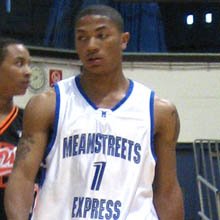
From Scout.com
Players listing interest in the University of Memphis (not previously committed to a school)
#2 PG 5 Star Derrick Rose, Chicago, IL

#4 PF 5 Star Herb Pope, Aliqippa, PA

#5 PF 5 Star Anthony Randolph, Dallas, TX
Others
#13 PF 4 Star Alex Tyus, Cincinnati, OH
#14 PG 4 Star Maurice Miller, Memphis, TN
#22 C 3 Star Will Bogan, Bell City, MO (SIGNED WITH MEMPHIS)
NR SG 3 Star Randy Culpepper, Memphis, TN
NR SF 3 Star Jamine Peterson, Fitchburg, MA
NR PG 2 Star Malcolm Pope, New York, NY
NR PG 2 Star Josh Chavis, Greensboro, NC
NR SG 2 Star DeAndre Bynum, Memphis, TN
NR PG 1 Star Brandon Ayers, Holly Springs, MS
NR SF 1 Star Devin Ebanks, Brooklyn, NY
Shawne Williams Hires an Agent

Shawne Williams hires agent, won't return to U of M
By Gary Parrish, Memphis Commercial Appeal
May 25, 2006
What has been an educated guess for a while is now official. Shawne Williams has signed with Immortal Sports Agency out of Los Angeles, meaning he no longer has the option of returning for his sophomore season at the University of Memphis. "After the great year we had at the University of Memphis, I feel I am ready for the challenge of the NBA," Williams said in a prepared statement. "I am looking forward to playing against the best players in the world and continuing to i
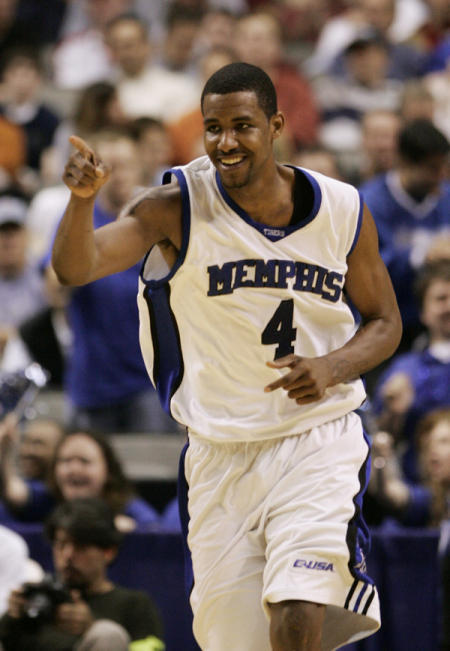 mprove."
Though Immortal Sports just confirmed its relationship with Williams, the 6-9 forward all but forfeited his amateur status two weeks ago when he took residency at Athletes’ Performance, a world-class training facility in Los Angeles that industry insiders told The Commercial Appeal cost anywhere from $10,000 to $20,000. For Williams to return to Memphis under NCAA rules following that development would’ve meant him repaying every expense, and considering his impoverished background, it was reasonable to assume playing for the Tigers again was, at that point, no longer a realistic option. Williams is projected as a first-round pick. With good workouts, some analysts believe he could sneak into the lottery. A mock draft posted this week on ESPN.com has Williams going 20th to the New York Knicks.
Meanwhile, sophomore guard Darius Washington continues to train at IMG Academy in Florida in preparation for the NBA Draft. And while he has publicly left the option of returning to Memphis on the table, sources within the program have long said there is little chance of that happening, and that Washington will remain in the draft despite having no first-round guarantee.
— Gary Parrish: 529-2365
Ready or Not: Orlando's Darius Washington Awaits NBA Draft
Ready or Not: Orlando's Darius Washington awaits NBA draft
Kyle Hightower
Orlando Sentinel Staff Writer
May 24, 2006
BRADENTON -- In a simple condo in the heart of a town that seems to have more shuffleboard venues than basketball courts, Darius Washington Jr. is busy giving one of NBA's best players the business.
"Come on, Vince, you don't want none," Washington says after dunking over Toronto Raptors star Vince Carter. "That's OK. You're used to getting beat by me."
Actually, Carter wasn't in the room. And though the person Washington really was taunting while playing video games was Bradley sophomore center Patrick O'Bryant, one thing was clear last week as Washington took a break from workouts out at IMG Academies: These days, the NBA is never far from his mind.
One of 62 college players to declare for early entry in the 2006 NBA Draft, Washington has been in Bradenton since May 8, training at the same facility and with the same instructors that Carter and a host of other NBA players have utilized. The goal is simple: to be the best player he can be for the June 28 draft.
He hasn't hired an agent and still might return to college at Memphis. Darius Washington Sr. is taking precautions to ensure his son doesn't break any NCAA rules, should he decide to return to school. And he is paying $6,000 for Darius Jr. to train at IMG.
But unlike two years ago, when Washington transferred from Edgewater to IMG to finish out his high school career and teasingly tested the draft waters, indications are there will be no pulling out this time around -- barring a dismal pre-draft camp.
Though Washington, 20, is just two years removed from leading Edgewater to Central Florida's only Class 6A title in the past 10 years, his world has completely changed.
He's a new father (Darius III is 5 months old). He endured a moment he never will forget on the court, missing two free throws at the end of the game in the Conference USA tourney final as a freshman. And while he has gained much notice for his skill as a college player, his weaknesses also have been exposed at Memphis.
Pro leanings
Though this isn't considered a deep draft for point guards, the 6-foot-2, 195-pound Washington isn't high on a lot of draft boards. Some analysts have even gone as far as to ponder whether Washington was a more attractive prospect coming out of high school than he is now.
"Darius is a kid who could have benefited from staying in school," said an NBA scout who asked to remain anonymous because it's not certain Washington will stay in the draft. "We have him as a second-rounder, but some teams have him as a late first-rounder. He has a good first step, decent range and can get to the basket. He's undersized and isn't a consistent shooter. He has confidence, but sometimes that works against him.
"We kept hearing that [Coach John] Calipari wouldn't mind seeing him go [to the NBA]. It seems as if Darius always had himself pegged for the next thing [the pros]."
As a freshman, Washington was Memphis' second-leading scorer, averaging 15.4 points (on 46.0 percent shooting from the floor and 39.5 percent from 3-point range) and recording at least five assists in 15 of 38 games. The Tigers (22-16) lost in an NIT semifinal.
This past season, he again was the Tigers' second-leading scorer, but his average dipped to 13.4 ppg (on 42.3 percent shooting from the floor and 35.7 percent from 3-point range) and he finished with more turnovers than assists (111-110). The Tigers (33-4) lost to UCLA in an NCAA Tournament regional final.
Despite the lesser statistics, Washington said he "learned how to think the game" and said that makes the negative chatter around him meaningless.
"I mean, I see it. I read it," he said. "That's somebody's opinion, but I still read it because it adds more fuel to my fire. It's motivation.
"It's about business coming down here [to Bradenton]. You come out here for a purpose. That's the point right now, to get better every day."
In his corner the entire way has been Darius Sr., 37, who has missed only one of his son's basketball games since seventh grade. Though he has been criticized for being an overbearing parent, Washington Sr. maintains that if having a close relationship with your child is overbearing, he's "guilty as charged" and won't apologize for it.
"It's nothing we haven't heard before," he said. "With me having Darius at a young age, we've always been more like brothers."
Having been through a challenging upbringing of his own, Darius Sr. vowed to provide his son with a better upbringing than he received.
"My mom always told me she wanted me to live better than she did," Darius Sr. said. "That's all I ever wanted for my son. He's living his dreams, not mine."
Last month, Washington Sr. smiled as he traced his son's first steps in his basketball journey, pointing to the logo at midcourt on the basketball court at Winter Park Community Center.
"It says 'WP' for Winter Park, but Darius used to call it 'Washington's Playground,'" Washington, Sr. said. "This was his spot."
Three weeks ago, when his son returned after the semester ended at Memphis and packed to head to IMG, he said it all had a familiar feeling to it.
"It's just like he did a full circle and is back to the beginning," Washington, Sr. said. "IMG prepared him for college. Now they're preparing him for the next level."
Getting good advice
If Darius Jr. is going to make a successful transition, analysts agree he is going to have to convince teams he can make it as a point guard. Some analysts and scouts have questioned whether he can run an offense effectively.
"Can he make it [in the NBA]? He's going to have to find the right situation, where somebody will be tolerant of what he does," said an NBA front-office executive who asked to remain anonymous. "Coaches like point guards who make good decisions."
In the meantime, Washington is getting a good test at IMG. He's receiving individual instruction from IMG head basketball trainer Joe Abunassar, who has helped more than 30 current NBA players.
Washington said his two years of college ball have made him a much better player than he was coming out of high school.
"What I've done in two years of college, some people haven't done in four," he said. "I can think the game now. In high school, all I did was run, run, run and shoot, shoot, shoot. In college, I really got down to the basics and learned to think more. It's not about just running all the time; it's slowing down and thinking."
Calipari said he has seen that change.
"By the end of the year, Darius had as much impact on our games as any guard in the nation," Calipari said. "The scouts know he has no fear, but the big thing they want to see is if he can run a team. I think he can."
Before making the decision to put his name in the draft, Washington said he spoke with former Florida point guard Anthony Roberson, who left UF after the 2004-05 season. Washington asked Roberson if he had any regrets about leaving school early, especially considering the Gators won the national title this season.
"He told me he just prepared himself mentally for the good and the bad," Washington said. "He said he didn't allow himself to think about the 'what if?' future. He told me he didn't regret it at all."
Roberson wasn't drafted and isn't on an NBA roster. But Washington said the most important thing he learned from Roberson is what went into his decision-making process.
[Leaving Memphis] was hard," Washington said. "But I made the decision that was best for me. That was to pursue my dreams. This whole process has taught me responsibility, on and off the court.
"I keep on being the same. That's what I do. I don't try to change anything. Trying to go to the league is my goal, so I'm not going to change what got me to this point. I'm going to keep on being the same."
Kyle Hightower can be reached at khightower@orlandosentinel.com.
Kyle Hightower
Orlando Sentinel Staff Writer
May 24, 2006
BRADENTON -- In a simple condo in the heart of a town that seems to have more shuffleboard venues than basketball courts, Darius Washington Jr. is busy giving one of NBA's best players the business.
"Come on, Vince, you don't want none," Washington says after dunking over Toronto Raptors star Vince Carter. "That's OK. You're used to getting beat by me."
Actually, Carter wasn't in the room. And though the person Washington really was taunting while playing video games was Bradley sophomore center Patrick O'Bryant, one thing was clear last week as Washington took a break from workouts out at IMG Academies: These days, the NBA is never far from his mind.
One of 62 college players to declare for early entry in the 2006 NBA Draft, Washington has been in Bradenton since May 8, training at the same facility and with the same instructors that Carter and a host of other NBA players have utilized. The goal is simple: to be the best player he can be for the June 28 draft.
He hasn't hired an agent and still might return to college at Memphis. Darius Washington Sr. is taking precautions to ensure his son doesn't break any NCAA rules, should he decide to return to school. And he is paying $6,000 for Darius Jr. to train at IMG.
But unlike two years ago, when Washington transferred from Edgewater to IMG to finish out his high school career and teasingly tested the draft waters, indications are there will be no pulling out this time around -- barring a dismal pre-draft camp.
Though Washington, 20, is just two years removed from leading Edgewater to Central Florida's only Class 6A title in the past 10 years, his world has completely changed.
He's a new father (Darius III is 5 months old). He endured a moment he never will forget on the court, missing two free throws at the end of the game in the Conference USA tourney final as a freshman. And while he has gained much notice for his skill as a college player, his weaknesses also have been exposed at Memphis.
Pro leanings
Though this isn't considered a deep draft for point guards, the 6-foot-2, 195-pound Washington isn't high on a lot of draft boards. Some analysts have even gone as far as to ponder whether Washington was a more attractive prospect coming out of high school than he is now.
"Darius is a kid who could have benefited from staying in school," said an NBA scout who asked to remain anonymous because it's not certain Washington will stay in the draft. "We have him as a second-rounder, but some teams have him as a late first-rounder. He has a good first step, decent range and can get to the basket. He's undersized and isn't a consistent shooter. He has confidence, but sometimes that works against him.
"We kept hearing that [Coach John] Calipari wouldn't mind seeing him go [to the NBA]. It seems as if Darius always had himself pegged for the next thing [the pros]."
As a freshman, Washington was Memphis' second-leading scorer, averaging 15.4 points (on 46.0 percent shooting from the floor and 39.5 percent from 3-point range) and recording at least five assists in 15 of 38 games. The Tigers (22-16) lost in an NIT semifinal.
This past season, he again was the Tigers' second-leading scorer, but his average dipped to 13.4 ppg (on 42.3 percent shooting from the floor and 35.7 percent from 3-point range) and he finished with more turnovers than assists (111-110). The Tigers (33-4) lost to UCLA in an NCAA Tournament regional final.
Despite the lesser statistics, Washington said he "learned how to think the game" and said that makes the negative chatter around him meaningless.
"I mean, I see it. I read it," he said. "That's somebody's opinion, but I still read it because it adds more fuel to my fire. It's motivation.
"It's about business coming down here [to Bradenton]. You come out here for a purpose. That's the point right now, to get better every day."
In his corner the entire way has been Darius Sr., 37, who has missed only one of his son's basketball games since seventh grade. Though he has been criticized for being an overbearing parent, Washington Sr. maintains that if having a close relationship with your child is overbearing, he's "guilty as charged" and won't apologize for it.
"It's nothing we haven't heard before," he said. "With me having Darius at a young age, we've always been more like brothers."
Having been through a challenging upbringing of his own, Darius Sr. vowed to provide his son with a better upbringing than he received.
"My mom always told me she wanted me to live better than she did," Darius Sr. said. "That's all I ever wanted for my son. He's living his dreams, not mine."
Last month, Washington Sr. smiled as he traced his son's first steps in his basketball journey, pointing to the logo at midcourt on the basketball court at Winter Park Community Center.
"It says 'WP' for Winter Park, but Darius used to call it 'Washington's Playground,'" Washington, Sr. said. "This was his spot."
Three weeks ago, when his son returned after the semester ended at Memphis and packed to head to IMG, he said it all had a familiar feeling to it.
"It's just like he did a full circle and is back to the beginning," Washington, Sr. said. "IMG prepared him for college. Now they're preparing him for the next level."
Getting good advice
If Darius Jr. is going to make a successful transition, analysts agree he is going to have to convince teams he can make it as a point guard. Some analysts and scouts have questioned whether he can run an offense effectively.
"Can he make it [in the NBA]? He's going to have to find the right situation, where somebody will be tolerant of what he does," said an NBA front-office executive who asked to remain anonymous. "Coaches like point guards who make good decisions."
In the meantime, Washington is getting a good test at IMG. He's receiving individual instruction from IMG head basketball trainer Joe Abunassar, who has helped more than 30 current NBA players.
Washington said his two years of college ball have made him a much better player than he was coming out of high school.
"What I've done in two years of college, some people haven't done in four," he said. "I can think the game now. In high school, all I did was run, run, run and shoot, shoot, shoot. In college, I really got down to the basics and learned to think more. It's not about just running all the time; it's slowing down and thinking."
Calipari said he has seen that change.
"By the end of the year, Darius had as much impact on our games as any guard in the nation," Calipari said. "The scouts know he has no fear, but the big thing they want to see is if he can run a team. I think he can."
Before making the decision to put his name in the draft, Washington said he spoke with former Florida point guard Anthony Roberson, who left UF after the 2004-05 season. Washington asked Roberson if he had any regrets about leaving school early, especially considering the Gators won the national title this season.
"He told me he just prepared himself mentally for the good and the bad," Washington said. "He said he didn't allow himself to think about the 'what if?' future. He told me he didn't regret it at all."
Roberson wasn't drafted and isn't on an NBA roster. But Washington said the most important thing he learned from Roberson is what went into his decision-making process.
[Leaving Memphis] was hard," Washington said. "But I made the decision that was best for me. That was to pursue my dreams. This whole process has taught me responsibility, on and off the court.
"I keep on being the same. That's what I do. I don't try to change anything. Trying to go to the league is my goal, so I'm not going to change what got me to this point. I'm going to keep on being the same."
Kyle Hightower can be reached at khightower@orlandosentinel.com.
Sunday, May 21, 2006
C-USA Commission Banowsky
C-USA's newfound unity has Banowsky satisfied
By Gary Parrish, Memphis Commercial Appeal
May 21, 2006
DESTIN, Fla. -- Britton Banowsky has been in charge of Conference USA for nearly four years, and he's endured one of the more drastic shake-ups in NCAA history.
Louisville exited.
So did Cincinnati.
For the remaining schools, including the University of Memphis, the challenge to be competitive without the advantage of having a Bowl Championship Series label has proved difficult. C-USA's status in the NCAA hierarchy slipped in a way that was, in fairness, probably unavoidable given the circumstances under which the Big East grabbed five key members.
Still, things are moving forward.
C-USA has a football title game that was wildly successful last year (Tulsa beat UCF before a crowd of more than 50,000), and baseball (with the addition of Rice) is better than ever. On the other hand, men's basketball, long the league's premier sport, finished 13th in the RPI last season despite the Tigers going 33-4 and earning a No. 1 seed in the NCAA Tournament before losing to UCLA in the Elite Eight.
Before the C-USA Spring Meetings concluded Thursday at the Hilton Sandestin Beach Golf Resort and Spa, Banowsky addressed those issues ... and more. He acknowledged the need for improvement in some areas and detailed what needs to happen for his league to grow in every aspect.
Q: How did these meetings go overall, having, for the most part, just completed your first year of schools competing against each other under the new league alignment?
A: I thought there would be a period of time where once we started competing against each other and we had winners and losers, then it would be more difficult to move together as a group. But what we encountered was just the opposite. Our group is working as well together as they ever have and better than any conference that I've ever been associated with in terms of working hard on the issues and cooperating at all levels. And so I continue to be very encouraged by the approach taken by our members to the conference. They all seem to have a genuine desire to see the conference grow and succeed.
Q: Is there one thing you've identified as something that must improve over the next year?
A: All of our sports are important, but I've got to say improving in men's basketball. There is no greater priority for us.
Q: How has the transition phase been?
A: I think our transition was a fairly seamless one, or as seamless as it could be given the dramatic nature of the circumstances. We've now gotten through one competitive year. We've benchmarked it, and we're getting after it. We have great resources and wonderful communities. Our markets are terrific and our universities, for the most part, are growing, not only in enrollment but also in community demographics and those kinds of things. So the future looks pretty bright for us.
Q: Is that BCS hurdle too much to jump?
A: I think Memphis, for example, is a case in point. John (Calipari) had a team this year that was a No. 1 seed. I mean, there are barriers for us, and (the non-BCS status) is a barrier. But it's not an insurmountable barrier.
Q: Looking ahead, where do you want this league in five years? What are the long-term goals?
A: Five years from now I want to be able to look back on this and say three things: One, that we flat-out won national championships in a variety of our sports because we want to compete at the very highest level. Two, that we've graduated our student-athletes. That's equally important. And three, I want us to be connected with our communities. Again, we have great markets. So I want to win those championships, graduate our kids and have the people in our communities caring about us.
By Gary Parrish, Memphis Commercial Appeal
May 21, 2006
DESTIN, Fla. -- Britton Banowsky has been in charge of Conference USA for nearly four years, and he's endured one of the more drastic shake-ups in NCAA history.
Louisville exited.
So did Cincinnati.
For the remaining schools, including the University of Memphis, the challenge to be competitive without the advantage of having a Bowl Championship Series label has proved difficult. C-USA's status in the NCAA hierarchy slipped in a way that was, in fairness, probably unavoidable given the circumstances under which the Big East grabbed five key members.
Still, things are moving forward.
C-USA has a football title game that was wildly successful last year (Tulsa beat UCF before a crowd of more than 50,000), and baseball (with the addition of Rice) is better than ever. On the other hand, men's basketball, long the league's premier sport, finished 13th in the RPI last season despite the Tigers going 33-4 and earning a No. 1 seed in the NCAA Tournament before losing to UCLA in the Elite Eight.
Before the C-USA Spring Meetings concluded Thursday at the Hilton Sandestin Beach Golf Resort and Spa, Banowsky addressed those issues ... and more. He acknowledged the need for improvement in some areas and detailed what needs to happen for his league to grow in every aspect.
Q: How did these meetings go overall, having, for the most part, just completed your first year of schools competing against each other under the new league alignment?
A: I thought there would be a period of time where once we started competing against each other and we had winners and losers, then it would be more difficult to move together as a group. But what we encountered was just the opposite. Our group is working as well together as they ever have and better than any conference that I've ever been associated with in terms of working hard on the issues and cooperating at all levels. And so I continue to be very encouraged by the approach taken by our members to the conference. They all seem to have a genuine desire to see the conference grow and succeed.
Q: Is there one thing you've identified as something that must improve over the next year?
A: All of our sports are important, but I've got to say improving in men's basketball. There is no greater priority for us.
Q: How has the transition phase been?
A: I think our transition was a fairly seamless one, or as seamless as it could be given the dramatic nature of the circumstances. We've now gotten through one competitive year. We've benchmarked it, and we're getting after it. We have great resources and wonderful communities. Our markets are terrific and our universities, for the most part, are growing, not only in enrollment but also in community demographics and those kinds of things. So the future looks pretty bright for us.
Q: Is that BCS hurdle too much to jump?
A: I think Memphis, for example, is a case in point. John (Calipari) had a team this year that was a No. 1 seed. I mean, there are barriers for us, and (the non-BCS status) is a barrier. But it's not an insurmountable barrier.
Q: Looking ahead, where do you want this league in five years? What are the long-term goals?
A: Five years from now I want to be able to look back on this and say three things: One, that we flat-out won national championships in a variety of our sports because we want to compete at the very highest level. Two, that we've graduated our student-athletes. That's equally important. And three, I want us to be connected with our communities. Again, we have great markets. So I want to win those championships, graduate our kids and have the people in our communities caring about us.
Saturday, May 20, 2006
HoopsHype.com Mock NBA Draft on Rodney Carney
%2003-23-06.2.jpg)
#13 Philadelphia 76ers
Rodney Carney 6-7 SG Memphis/Senior
Ridiculously athletic wing player with a prototypical NBA body. Has deep range on his jump shot. Outstanding first step, creates separation from defenders and elevates smoothly off the dribble. Basketball IQ and shot selection and be very questionable. Very inconsistent, particularly his defense and outside shot. Amazing one game, silent the next. Still has a huge upside to improve, but will the light bulb come on?
Comparison: Ricky Davis
Stats: 17.2 ppg, 4.3 rpg, 1.3 spg
Rookie Season Salary: $1,349,400
Ranking: 4th Shooting Guard, 5th Senior
Friday, May 19, 2006
C-USA New High Profile Coaches

C-USA landing some big-time coaching names
By Gary Parrish
May 19, 2006
 DESTIN, Fla. -- A group of men stood in this resort's lobby the other day, just talking and laughing and acting like any other group of men. They wore trunks. They wore T-shirts.
They looked completely normal ... except nobody treated them that way because the unsuspecting vacationers who had brought their families to the beach for the week are used to only seeing big-time college basketball coaches on TV, not in the lounge chair next to them asking to borrow a bottle of sun block. "Some of our coaches have big names and big backgrounds and are recognizable," said Conference USA associate commissioner Chris Woolard. "When you look at the names of the coaches in our league, it's hard to argue C-USA can't be one of the best leagues in the country."
It's easy to bash C-USA.
From the pitiful RPI ranking to its status as a non-BCS league, there are plenty of reasons to look at this basketball conference and dream of the day the University of Memphis receives an offer to leave for bigger and better things.
Still, there's genuine hope.
And it revolves around the fact that with the additions of former Indiana coach Mike Davis and former North Carolina coach Matt Doherty this off-season -- to UAB and SMU, respectively -- C-USA now has some seriously accomplished/famous coaches representing five of its members.
Granted, it's not the ACC (Duke's Mike Krzyzewski, North Carolina's Roy Williams, Maryland's Gary Williams, Georgia Tech's Paul Hewitt and Florida State's Leonard Hamilton) or the Big East (Connecticut's Jim Calhoun, Louisville's Rick Pitino, Syracuse's Jim Boeheim, Villanova's Jay Wright and Marquette's Tom Crean). But C-USA's list of coaches compares favorably with most other BCS leagues, and it's probably significantly better than all other conferences labeled mid-majors.
(Quick: Name five coaches in the Mountain West or WAC.)
"Every program has different challenges," C-USA commissioner Britton Banowsky said before his league's annual spring meetings adjourned Thursday. "But like I've said before, if you have the people in place who have gotten it done before and who know how to get it done, then you have a high chance of success."
The credentials are impressive.
Consider that C-USA now has two Final Four coaches (Memphis' John Calipari at UMass in 1996 and Davis at Indiana in 2002), two Associated Press National Coaches of the Year (Southern Miss' Larry Eustachy at Iowa State in 2000 and Doherty at North Carolina in 2001), and another coach (Houston's Tom Penders) who has won 566 career games and been to three Sweet 16s (in 1988 at Rhode Island, 1990 and '97 at Texas) and an Elite Eight (1990). Add that group to some first-time head coaches who were assistants at big-time programs -- Tulsa's Doug Wojcik at North Carolina and Michigan State; Tulane's Dave Dickerson at Maryland -- and the pieces for improvement and notoriety seem to be in place.
"We have a lot of coaches who know what it looks like at the highest level," Doherty said. "We know where we want things to go at our universities and in this league."
Now they just have to get going.
"We all have to go win games," Davis said. "Who you are, where you are or what you've done doesn't matter unless you win games. So that's what we've got to do."
-- Gary Parrish: 529-2365
--------------------
New big-name Coaches in Conference USA
Mike Davis, UAB
Made his name at: Indiana (115-79 in six seasons)
Hoosier highlight: Coached Indiana to 2002 NCAA championship game, where it lost to Maryland
Hoosier lowlight: In 2004, coached Indiana to first losing season since 1970.
Matt Doherty, SMU
Made his name at: North Carolina (53-43 in three seasons)
Heel highlight: Carolina went 26-7 in Doherty's first season.
Heel lowlight: In 2002, coached first Carolina team since 1975 to miss the NCAA tournament.
Dick Vitale on UAB's Mike Davis Upgrading the Non-Conf Schedule
Mike Davis is having an impact at UAB, with the signing of 6-10 Jeremy Mayfield. That's right, you may remember Mayfield originally signed with Oklahoma. He was released from his scholarship commitment when Kelvin Sampson went to Indiana and the Sooners hired Jeff Capel as their new coach. Davis has also made the non-conference schedule tougher so that the RPI won't be an issue in the future when the NCAA tournament selection committee meets to look at the Blazers. UAB will face defending national champion Florida at the Orange Bowl on December 30. The Blazers also have games scheduled at Cincinnati, at Old Dominion, at Virginia Commonwealth and may add Connecticut in the future too.
Wednesday, May 17, 2006
C-USA Tournament to Be in Memphis in 2007
C-USA basketball tournament returning to Memphis in 2007
By Gary Parrish, Memphis Commercial Appeal
May 17, 2006
DESTIN, Fla. – In an expected move, Conference USA athletic directors today unanimously voted to return the league’s men’s basketball tournament to Memphis for a third consecutive year. The vote still needs next month’s ratification by C-USA’s board of directors to become official, but that’s considered a formality, meaning the 2007 event will be played at FedExForum with the University of Memphis serving as host.
"I think the group felt so comfortable with the job Memphis did last year; there was just so much support for maintaining momentum," said C-USA commissioner Britton Banowsky. "We really didn’t focus on any alternatives." In a related note, the league athletic directors also voted to hold the 2007 women’s basketball tournament in Tulsa.
By Gary Parrish, Memphis Commercial Appeal
May 17, 2006
DESTIN, Fla. – In an expected move, Conference USA athletic directors today unanimously voted to return the league’s men’s basketball tournament to Memphis for a third consecutive year. The vote still needs next month’s ratification by C-USA’s board of directors to become official, but that’s considered a formality, meaning the 2007 event will be played at FedExForum with the University of Memphis serving as host.
"I think the group felt so comfortable with the job Memphis did last year; there was just so much support for maintaining momentum," said C-USA commissioner Britton Banowsky. "We really didn’t focus on any alternatives." In a related note, the league athletic directors also voted to hold the 2007 women’s basketball tournament in Tulsa.
C-USA to Expand League Basketball Schedule
C-USA to expand league basketball schedule
By GARY PARRISH
Scripps Howard News Service
17-MAY-06
DESTIN, Fla. -- Last year John Calipari fought against it and won. But now he's conceding on the issue of playing 16 Conference USA basketball games _ against his personal wishes and best interest _ in the spirit of aiding the rest of the league.
"There was some talk about keeping it at 14 games, but I think what's happened is that it's just so hard for some of these schools to get non-conference games," Calipari said Tuesday after emerging from a five-hour debate here at the C-USA Spring Meetings.
"I understand what some of these other schools are going through, so it's hard for me to sit there and argue with them ... even though I did because it could hurt me. But I'm fine with it, and we'll be fine."
When the NCAA raised the limit of regular-season games by one to 29 this offseason, C-USA was put in a position where it almost had to increase the number of league games from 14 to 16.
Otherwise, member schools would find themselves playing 14 conference games and 15 non-conference games, a ratio that is rare in modern-day college basketball and difficult to achieve for everybody in C-USA not named Memphis.
For example, a school like Central Florida can't get home-and-home deals with many quality opponents.
Furthermore, paying teams to visit Orlando _ a practice commonly referred to as "buy games" that can cost anywhere from $40,000 to $80,000 _ is a financial nightmare because the money can't be recouped from a sparse crowd.
So for UCF, the more league games, the better.
"Scheduling has become very, very difficult, and this would be two less games that you have to schedule," said UCF coach Kirk Speraw. "It would be easier on some teams."
On the flipside is Memphis, a high-profile program that has no problem scheduling home-and-home series, evidence being current agreements with schools like Arizona, Gonzaga, Tennessee and Cincinnati.
Furthermore, buy games are huge cash-flow producers at FedExForum, considering the Tigers will likely sell at least 15,000 season tickets this season. Using an average ticket price of $20, that's $300,000 in revenue. Subtract the estimated $80,000 that would go to the opponent, and Memphis would still turn a net profit of $220,000 per buy game.
So for Memphis, the fewer league games the better.
"With 16 (conference) games I can't go get another (non-conference premier) home game," Calipari said. "I was going to get a home game (with another premier school), but I can't do that now. Now we just better hold tight where we are."
The switch to 16 league games means C-USA will move to a format under which every member plays every other member once and five particular members a second time.
That means Memphis will continue a home-and-home set-up with UAB, Southern Miss and Tulsa and add two more schools to that list. All Calipari is asking is that one of them be Houston, which at this point projects as the second-best team in C-USA.
"We'll accept what the league does, but I just hope the league protects us," Calipari said. "The idea is to keep the top strong and bring everybody else up."
Chris Woolard agrees, but he's making no promises.
"There's a consensus that we need to move to 16 league games, but then the question is how do you add the additional games; that's why our meeting ran so long," said Woolard, the C-USA associate commissioner who serves as a liaison to men's basketball.
"Every guy is looking for something different, and that's where you've got 12 guys with 12 agendas, and that's when we have to step in and do what's best for the conference and have those guys trust that we're going to put in the time and effort to come up with the right matchups.
"I guarantee you all 12 teams won't like the two teams they get. But we'll do it in a fair and equitable way."
(Contact Gary Parrish of The Commercial Appeal in Memphis, Tenn., at www.commercialappeal.com.)
By GARY PARRISH
Scripps Howard News Service
17-MAY-06
DESTIN, Fla. -- Last year John Calipari fought against it and won. But now he's conceding on the issue of playing 16 Conference USA basketball games _ against his personal wishes and best interest _ in the spirit of aiding the rest of the league.
"There was some talk about keeping it at 14 games, but I think what's happened is that it's just so hard for some of these schools to get non-conference games," Calipari said Tuesday after emerging from a five-hour debate here at the C-USA Spring Meetings.
"I understand what some of these other schools are going through, so it's hard for me to sit there and argue with them ... even though I did because it could hurt me. But I'm fine with it, and we'll be fine."
When the NCAA raised the limit of regular-season games by one to 29 this offseason, C-USA was put in a position where it almost had to increase the number of league games from 14 to 16.
Otherwise, member schools would find themselves playing 14 conference games and 15 non-conference games, a ratio that is rare in modern-day college basketball and difficult to achieve for everybody in C-USA not named Memphis.
For example, a school like Central Florida can't get home-and-home deals with many quality opponents.
Furthermore, paying teams to visit Orlando _ a practice commonly referred to as "buy games" that can cost anywhere from $40,000 to $80,000 _ is a financial nightmare because the money can't be recouped from a sparse crowd.
So for UCF, the more league games, the better.
"Scheduling has become very, very difficult, and this would be two less games that you have to schedule," said UCF coach Kirk Speraw. "It would be easier on some teams."
On the flipside is Memphis, a high-profile program that has no problem scheduling home-and-home series, evidence being current agreements with schools like Arizona, Gonzaga, Tennessee and Cincinnati.
Furthermore, buy games are huge cash-flow producers at FedExForum, considering the Tigers will likely sell at least 15,000 season tickets this season. Using an average ticket price of $20, that's $300,000 in revenue. Subtract the estimated $80,000 that would go to the opponent, and Memphis would still turn a net profit of $220,000 per buy game.
So for Memphis, the fewer league games the better.
"With 16 (conference) games I can't go get another (non-conference premier) home game," Calipari said. "I was going to get a home game (with another premier school), but I can't do that now. Now we just better hold tight where we are."
The switch to 16 league games means C-USA will move to a format under which every member plays every other member once and five particular members a second time.
That means Memphis will continue a home-and-home set-up with UAB, Southern Miss and Tulsa and add two more schools to that list. All Calipari is asking is that one of them be Houston, which at this point projects as the second-best team in C-USA.
"We'll accept what the league does, but I just hope the league protects us," Calipari said. "The idea is to keep the top strong and bring everybody else up."
Chris Woolard agrees, but he's making no promises.
"There's a consensus that we need to move to 16 league games, but then the question is how do you add the additional games; that's why our meeting ran so long," said Woolard, the C-USA associate commissioner who serves as a liaison to men's basketball.
"Every guy is looking for something different, and that's where you've got 12 guys with 12 agendas, and that's when we have to step in and do what's best for the conference and have those guys trust that we're going to put in the time and effort to come up with the right matchups.
"I guarantee you all 12 teams won't like the two teams they get. But we'll do it in a fair and equitable way."
(Contact Gary Parrish of The Commercial Appeal in Memphis, Tenn., at www.commercialappeal.com.)
Tuesday, May 16, 2006
A Life Lesson for Darius Washington, Jr.
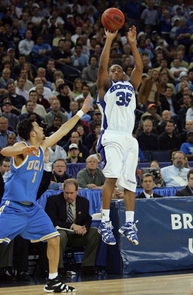
FROM MY SEAT: A Life Lesson for Darius

BY FRANK MURTAUGH, Memphis Flyer
MAY 8, 2006
Darius Washington has until June 18th to change his mind and return to the University of Memphis for his junior year. Here's hoping -- with the help of his parents, coach, or the mother of his child -- Washington comes to his senses.
Let me stress: this has absolutely nothing to do with the value Washington might bring the 2006-07 Tiger basketball team. Nothing. With star recruit Willie Kemp arriving to man the point guard position (backed up by Andre Allen), Washington's role would shift to that of a shooting guard, where he'd have to share minutes with sophomore-to-be Antonio Anderson. That move to the periphery of coach John Calipari's rotation is certainly a factor in Washington's decision to leave college (and the reason you haven't heard a word of protest from Calipari). But it doesn't make the decision any less misguided.
On the same day Washington announced his intentions last month, his teammate Shawne Williams -- the 2005-06 Conference USA Freshman of the Year -- surprised no one by saying he'd be entering the June 28th NBA draft, too. That's where the similarities between Washington and Williams end. Tiger fans should consider the season they cheered Williams a bonus. Had a few variables been different, Williams would have jumped straight from Hamilton High School to "the league." Having already lost a brother to violence, Williams is a classic example of what the NBA once called a hardship case. His talents are such that he'll be drafted in the first round and thus receive a guaranteed NBA contract. He'll be an instant provider for a family very much in need.
Which brings us back to Washington, a young man whose lasting image from his Memphis days will be the tear-jerking collapse after a pair of missed free throws ended his team's chances at an NCAA tournament berth in 2005. Washington's girlfriend gave birth to a little boy -- Darius III -- last December. So the role of family provider is clearly on Washington's mind. The difference, though, is that Washington is no lock to be drafted at all, much less in the first round where a contract is assured. His financial security rests in the hands of NBA talent scouts, his future firmly in the center of a risk-reward scale that could tip either way.
Put Darius Washington in the exact same life position where he finds himself today, but take away his basketball skills. A far-fetched scenario, to be sure. But in such a world, the wisest thing for a a 20-year-old father would be to educate himself, to earn his college degree, by whatever means are at his disposal. His child's future would be every bit as dependent on that degree as his own.
And this is where Calipari has failed the player he proclaimed central to his program the last two seasons. Since his days at the University of Massachusetts, Calipari has professed to coach with his players' best interests in mind. If that means a star player should turn pro early -- see Marcus Camby -- Calipari has publicly supported the decision, as counter as it may be to the missionof an academic institution. Marcus Camby and Dajuan Wagner -- both top-10 draft picks -- are one category. Darius Washington is another.
Here's a remarkable trend from the Calipari era in Memphis. In six years, Calipari has coached four players who have earned C-USA Freshman of the Year honors. Unless Washington (or Williams) changes his mind, not one of these four players has so much as reached his junior year at the U of M.
I've rung the bell several times in support of an improved graduation rate under Calipari. But the fact is, the program is graduating its fringe players (i.e. Modibo Diarra, Nathaniel Root), while its stars fall short. (Antonio Burks, Anthony Rice, and Rodney Carney have all reached the cusp of graduating, but have yet to don cap and gown.) If life lessons are still part of a college coach's responsibility to his players, the coach with the handsome raise at Memphis is falling short.
Washington should track down Wagner for a feeler on NBA life, and the virtues of leaving school early. Once a high school phenom making national headlines, Wagner was out of the NBA last season, taken down by chronic injury and illness. You have to hope he banked his money.
And I hope I'm wrong about Washington. I hope 10 years from now -- when Washington is 30 and his son 10 -- Washington finds himself a decade into a rewarding career as a pro basketball player. But what if he doesn't? He'll still be 30. Darius III will still be 10. And what will the future hold? Will Calipari be there for the right kind of advice? If not, the tears we might shed over Darius Washington will be heavy with consequences much more poignant than a basketball tournament.
Subscribe to:
Posts (Atom)